Two gay bars in San Francisco’s Castro district say they have paused their use of a controversial ID-scanning system that photographs patrons following backlash from the local LGBTQ community.
In June, local news outlet Gazetteer reported that at least three LGBTQ bars — The Mix, Badlands, and Toad Hall — were using PatronScan Guard+, an ID-scanning system that photographs patrons and stores their images in a database.
The database contains a patron’s zip code, birth date, gender, ID expiration date, and photograph. Patronscan says the photograph serves only as a time-stamped record of the patron’s appearance and is not used for facial recognition or biometric identification.
At U.S. venues, a patron’s data is automatically deleted after 21 days unless the venue has “flagged” the person for behavior such as fighting, fraud, or theft. In those cases, the information remains in the database.
A venue can flag a patron in its own system for up to five years. For more serious allegations, including violence or sexual assault, a flag can be shared across the PatronScan network for up to one year. That flag appears when the patron’s ID is scanned at another participating venue, but businesses cannot search or browse one another’s records.
A PatronScan spokesperson previously told SFGate that at least eight venues use the company’s technology.
Anti-surveillance organizers, including those behind the website Club 1984, argue that the system leaves patrons’ information vulnerable and undermines the historic role of queer spaces as places where LGBTQ people “wouldn’t be photographed, named, and listed.”
Local media coverage of the technology fueled concerns that patrons’ data could be sold or hacked by malicious actors, including those seeking to target or harass LGBTQ people, prompting a backlash against the bars.
The digital rights group Fight for the Future launched a petition calling on gay bars nationwide to stop using PatronScan and other biometric identification systems in queer spaces and to delete databases containing patrons’ information. As of August 7, the petition had received more than 2,000 signatures.
Badlands and Toad Hall announced in a joint Instagram post on August 8 that they were immediately pausing their use of PatronScan Guard+.
“We have heard the concerns regarding the use of PatronScan at Badlands and Toad Hall in San Francisco, and we are listening. Effective immediately, we are pausing the use of PatronScan while we review our ID verification and security practices,” the venues said in their statement.
“The safety of our guests and staff remains a priority, as do privacy and trust. Our security teams will continue to thoroughly check IDs manually during this time,” the statement continued. “We appreciate everyone who has shared their concerns and remain committed to providing a safe and welcoming environment for all.”
The bars have not set an end date for the pause, according to San Francisco Fox affiliate KTVU.
Following the announcement, PatronScan spokesperson Rhiannon Mosoronchon told SFGate, “We respect their decision to complete this review and look forward to hearing how we can help.”
The Mix, the third venue cited by Gazetteer, says it will continue using PatronScan, citing safety concerns. The bar told KTVU that it adopted the system after an employee was assaulted by a patron who had been kicked out.
Patrons cannot opt out of having their IDs scanned at participating venues. They can later use a form on PatronScan’s website to request that their information be deleted or dispute a venue’s decision to “flag” them.
“This is not something that is commonplace or acceptable. Even TSA, when you think about it, they give you the option to opt out of face scans, and that’s airport security,” Fight for the Future campaign director Reem Suleiman told SFGate. “Some of the most extreme measures, you still have the option to opt out.”
Sarah Phillips, another Fight for the Future campaign director, warned that ID-scanning technology could be exploited by malicious actors.
“As we speak, the federal government and anti-LGBTQ actors across the country are putting together databases of trans people and attacking our community in every way imaginable,” Phillips said in a statement to LGBTQ Nation. “Gay bars should be a space where we can gather without the fear of dangerous and invasive surveillance technology that has historically been weaponized against vulnerable communities.”
Police in Asheville, North Carolina, shot and killed a man who allegedly opened fire on a gay bar from its parking lot after being kicked out of the establishment.
Shakey's -- which markets itself as a "gay dive bar for drag, karaoke, DJs, cheap drinks, patio hangs, dance parties, and late-night pizza" -- said in a statement posted to Instagram that an individual "whose behavior caused concern" was asked to leave the bar during the early morning hours of Wednesday, July 15. He was later seen with a gun in the bar's parking lot.
Editor's note: This article contains graphic descriptions that may upsetting to readers.
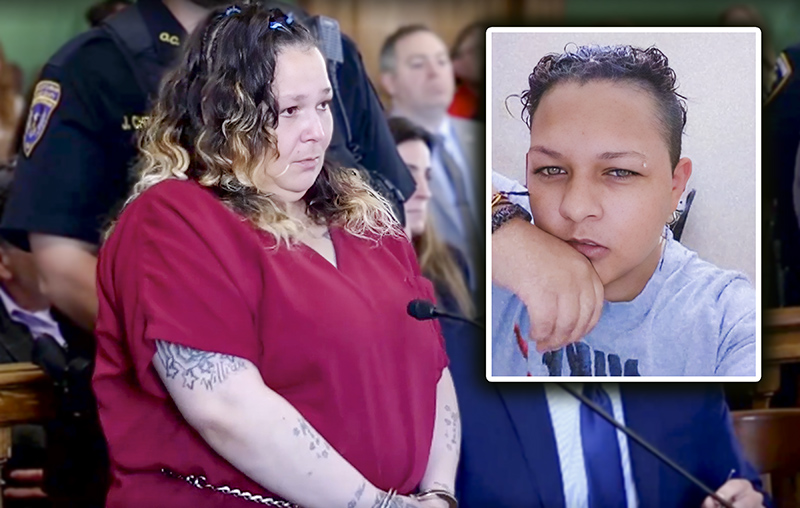
The woman described as the "ringleader" in the killing of transgender man Sam Nordquist in upstate New York has pleaded guilty to state charges, agreeing to a maximum sentence of life in prison without the possibility of parole.
Precious Arzuaga, 40, faced 11 charges, including first-degree murder, two counts of first-degree kidnapping, second-degree conspiracy, first-degree aggravated sexual abuse, and concealment of a corpse for her role in holding Nordquist captive, torturing him inside a Hopewell motel room, and disposing of his body in the winter of 2025.
Leon's Backroom, a gay bar in Baltimore's Mount Vernon neighborhood that has operated since 1957, is temporarily closing following the death of longtime owner Ron Singer earlier this month.
In a Facebook post on Wednesday, July 15, Baltimore's oldest gay bar announced that it would open from 4 to 9 p.m. for "one final, special shift" before closing temporarily. Staff said they would try to reopen the bar as quickly as possible.
These are challenging times for news organizations. And yet it’s crucial we stay active and provide vital resources and information to both our local readers and the world. So won’t you please take a moment and consider supporting Metro Weekly with a membership? For as little as $5 a month, you can help ensure Metro Weekly magazine and MetroWeekly.com remain free, viable resources as we provide the best, most diverse, culturally-resonant LGBTQ coverage in both the D.C. region and around the world. Memberships come with exclusive perks and discounts, your own personal digital delivery of each week’s magazine (and an archive), access to our Member's Lounge when it launches this fall, and exclusive members-only items like Metro Weekly Membership Mugs and Tote Bags! Check out all our membership levels here and please join us today!





You must be logged in to post a comment.