Documentaries generally don’t need an onscreen host. The camera can play host, and real-life stories can tell themselves, with offscreen prompting from research and production, and shrewd direction and editing providing context.
If a filmmaker wants to put the prompting onscreen, there’s a delicate art to inserting themselves or an on-camera host into the story without stealing the spotlight from their subject.
Ryan Ashley Lowery, director and creator of the LGBTQ doc Light Up, is anything but delicate in inserting himself and two on-camera host-interviewers — Michael Mixx and Maurice Eckstein — into the film’s still-compelling portrait of Atlanta’s “community of Black same gender loving men and trans women.”
Light Up explores queer Black ATL through the stories of five individuals, all prominent in the community, sharing their experiences of coming out, coming of age, and coming into their own as successful professionals and proud LGBTQ advocates.
Each one has an enthralling tale. A pleasingly diverse group, including fashion designer Octavius Terry, preacher turned activist Benjamin Clayton, stylist and Real Housewives fave Derek Jae, Legendary voguer, model, and makeup artist Simone Tisci, and advocate and content creator Obio Jones, they come from vastly different childhood experiences, representing different wavelengths on the queer spectrum, from gay to bi to gender nonconforming to trans.
And they all express themselves convincingly in the film’s in-depth interviews, mostly conducted in the intimate space of their own homes and studios. Whenever the hosts guide the conversation down a fruitful path and kindly get out of the way, our subjects have time and space to draw us into the dramatic, sometimes traumatic, experiences that have shaped them.
Light Up: Tisci, Michael Mixx, and Derek Jae
Tender recollections of family, faith, and first loves are mingled with revelations of past physical, emotional, and sexual abuse. Designer Terry, for example, both relishes the professional triumph of creating the tux that award-winning Moonlight screenwriter Tarell Alvin McCraney wore to the Oscars, and also bravely recounts being victimized by his abuser at the age of two.
The specter of sexual violence also looms in the childhood of trans woman Tisci, though neither she nor Terry attributes their present identity to the abuse in their past. Terry stresses the point, lest anyone jump to that conclusion.
By contrast, Jones recalls growing up with a warm sense of safety nurtured by his free-thinking parents. When he confessed to them his first crush on a boy, in first grade, his parents didn’t make him feel ashamed. That came later. “My shame came from society,” he says.
Propelled by the subjects’ candor, and their insights, Light Up offers a thoughtful, lived-in, multi-faceted view of being Black and LGBTQ in America and in the relative queer mecca of Atlanta. Particularly in former minister Clayton’s entertaining descriptions of clinging to the Christian church and a DL sex life to fit the macho mold, the film gives fresh voice to oft-discussed subjects like religion and homophobia in the Black community.
If only the filmmaker had trusted these voices to carry the film, without the pretense of the magazine-style format and the on-camera intrusion of the hosts. Sometimes the intrusion comes from a poorly conceived or delivered line of questioning, like Lowery asking Tisci if she thinks she can pass as a woman.
Too often, host Mixx, especially, pulls focus by posing too hard for his own closeup, and the director more or less complies — inexplicably, in one recurring shot, rendering Mixx’s bare chest as the unintended focal point.
Another of Mixx’s interview setups actually gives prominent placement to a display of his namesake fresh-pressed juice drink. For no good reason, a tub of ice stocked with mason jars of the colorful concoction sits in the near background next to a poster advertising Mixx’s logo, which is also helpfully painted on his fingernails and emblazoned on a ball cap he wears.
We should not be staring at his juice drink logo while someone pours their heart out about past trauma. But we’re stuck with that awkwardness, as well as clunky editing transitions between subjects and rushed montages that acknowledge the bigger picture beyond these five individuals, who nevertheless all make a strong impression.
Despite the film’s flaws, Light Up allows us to know its subjects and, through their evolution, gain a vision of Black LGBTQ advocates living boldly, truthfully, and fabulously out loud.
Light Up (★★☆☆☆) is available to rent or purchase through VOD on Prime Video, and is streaming free with ads on YouTube. Visit lightupdocumentary.com.
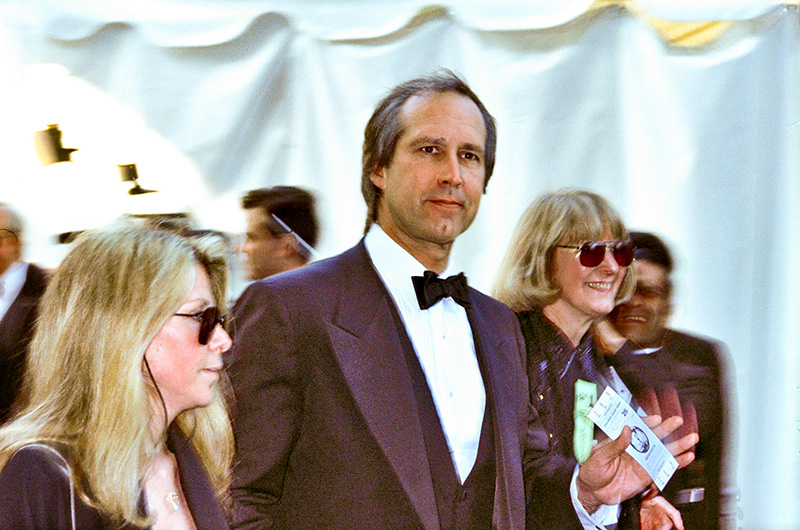
Terry Sweeney, the first openly gay cast member of Saturday Night Live, had some harsh words for actor Chevy Chase, a member of the show’s original cast who has returned to host multiple times.
"Chevy is one of those turds you flush down the toilet but it comes back up again and again," the 75-year-old Sweeney, best remembered for his exaggerated impression of First Lady Nancy Reagan, told the New York Post.
Sweeney’s comments come as a new CNN documentary, I'm Chevy Chase, and You're Not, directed by Marina Zenovich, is set to premiere on January 1 at 8 p.m.
A Wisconsin man is maintaining his innocence after being accused of using Grindr to carry out a sinister catfishing scheme against another man.
Matthew Huebschman, 32, of Appleton, pleaded not guilty to a single charge of stalking during a December 15 hearing before Outagamie County Judge Carrie Schneider, according to Seehafer News.
Police allege that Huebschman used the gay dating app Grindr to impersonate the victim and invite men to the victim’s home without his knowledge, then watched from a nearby location as the men arrived.
The sudden turn from sunny early autumn to a wintry November left us feeling more than a little light-deprived. But one sure remedy to brighten these gray days is to plan ahead for the joyful whirl of the holiday season.
Should those plans include taking in a fabulous live show here in D.C., Maryland, Virginia, or beyond, it's best to start making your list now and checking it twice. We're here to help with a LGBTQ-focused rundown of the divas, divos, and drag queens who might be jingling your bells from now through December.
Gay Men's Chorus: The Holiday Show -- The GMCW's most popular show every year brings an extravaganza of holiday carols, high-kicking reindeer, and sparkling snowflakes, which sounds like a euphemism for something festive to accompany songs like "O Holy Night," "Rudolph the Red Nosed Reindeer," "Let It Snow," and "Go Tell It on the Mountain" (12/13-14, 12/20, Lincoln Theatre)
These are challenging times for news organizations. And yet it’s crucial we stay active and provide vital resources and information to both our local readers and the world. So won’t you please take a moment and consider supporting Metro Weekly with a membership? For as little as $5 a month, you can help ensure Metro Weekly magazine and MetroWeekly.com remain free, viable resources as we provide the best, most diverse, culturally-resonant LGBTQ coverage in both the D.C. region and around the world. Memberships come with exclusive perks and discounts, your own personal digital delivery of each week’s magazine (and an archive), access to our Member's Lounge when it launches this fall, and exclusive members-only items like Metro Weekly Membership Mugs and Tote Bags! Check out all our membership levels here and please join us today!






You must be logged in to post a comment.