
Studio Theatre’s Purlie Victorious Is Funny, Fierce, and Timely
Psalmayene 24 stages a swell Old South farce in the richly pleasing Purlie Victorious, balancing broad comedy with biting commentary.

A Confederate flag in a casket makes for a provocative and profoundly satisfying parting image in Studio Theatre’s potently funny production of Purlie Victorious (A Non-Confederate Romp Through the Cotton Patch).
Satisfying, because as a nation, the U.S. has been trying for 160 years to bury the Confederacy and the slavery-based economy for which its proponents fought and died.
Provocative, because as we’re reminded every election cycle all these years since the Civil War, those same Confederate principles, rooted in white supremacy and Black oppression, persisted in the Jim Crow South, and, apparently, still animate the politics of a too-large swath of our fellow Americans today.

Hence, Purlie Victorious, set in the Old South of the 1950s, and written by the great Ossie Davis during the height of the Civil Rights Movement, feels as fresh as your morning news.
Purlie, a Georgia preacher portrayed with passion and vigor by Warner Miller, deems himself a freedom fighter, aiming to seize his slice of the American pie even if he has to lie and manipulate to get it. “We want our cut of the Constitution,” he declares late in the play. Not a teaspoon’s worth, he clarifies, but a bucket-full.
Born into a family of sharecroppers, Purlie means to buy his way out of a system that keeps his people in permanent debt to the cotton plantation owner whose forefathers held his forebears in slavery. So he’s hatched a scheme to fool plantation owner Ol’ Cap’n Cotchipee (Stephen Patrick Martin) into paying off a family inheritance owed to Purlie’s Cousin Bea.

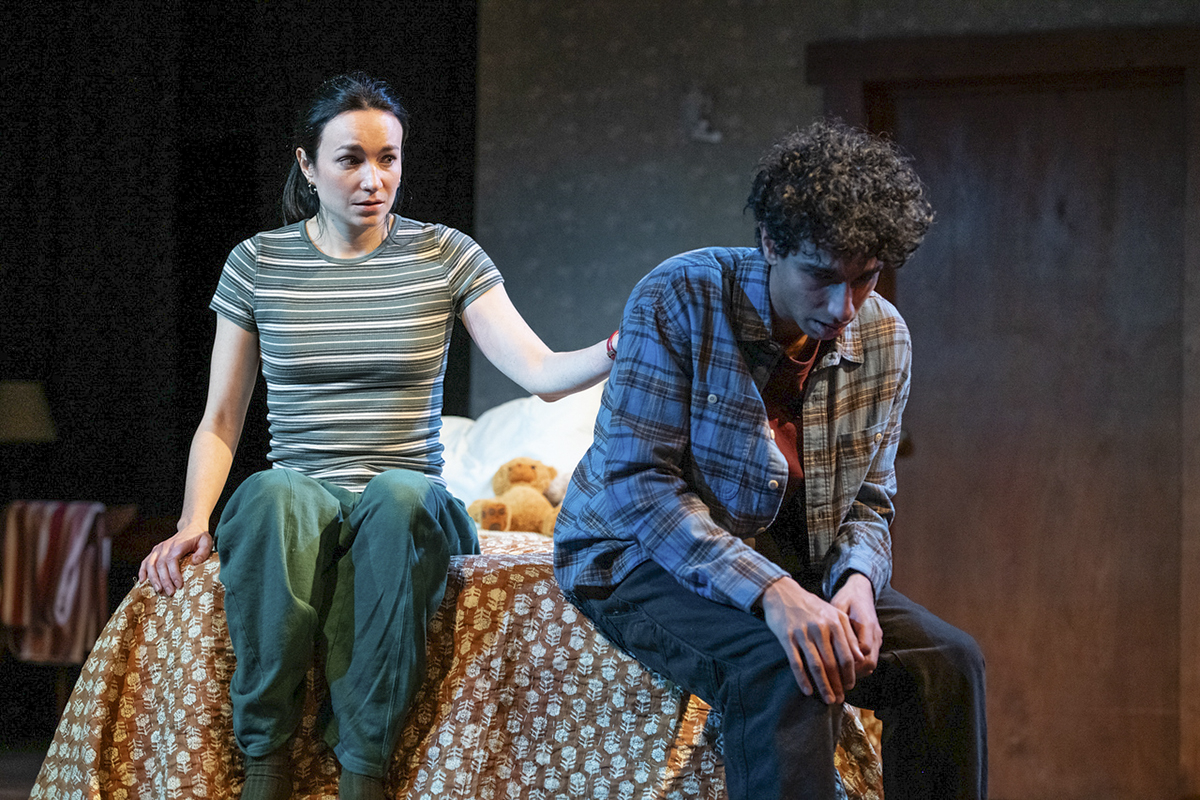
The problem is, Bea’s dead and gone. So Purlie’s scheme will depend on passing off sweet, naïve housemaid Lutiebelle Gussie Mae Jenkins (Danaya Esperanza) as his heiress cousin. The play rather depends on her, too. Lutiebelle’s faith in Purlie, as a man of God seeking to start his own church, and as a good man she might start a new life with, imbues his fight with greater purpose.
It’s also much through her eyes that we view this racist system of indentured labor. She can barely wrap her head around the idea that men like Ol’ Cap’n conceived of owning another human being, either outright or through punishing debt. Portrayed as something of a simple girl, she’s not wrong, and, through Esperanza’s shining performance, she’s also utterly charming.

So deep in the character that there’s no visible trace of any human other than Luttiebelle, Esperanza captures the young lady’s bright innocence and ardor for Purlie, while also pulling off feats of physical comedy that keep the audience rolling with laughter.
For despite the story’s bitter undercurrents of racial animus, this is indeed a witty, playful romp through the Non-Confederate South, which director Psalmayene 24 paces expertly over the 100-minute running time. Miller’s prideful, prevaricating minister drives that pace, delivering barnstorming speeches with aplomb.
In keeping with the tempo, the actor occasionally loses a little clarity in the enunciation of Purlie’s flowery sermons, but that doesn’t dampen his force and intent. Making a concerted call for a new South, Purlie might be a schemer, but his is a righteous vision of freedom.
Standing opposed to his vision — then, and now, it would seem — Ol’ Cap’n is the picture of Jim Crow hypocrisy, a white-suited “gentleman” who rules with a bullwhip.
Ol’ Cap’n might easily register as mere caricature, were it not for Martin’s nuanced portrayal, which doesn’t misplace the man’s humanity even while lampooning his ridiculous notion of how things should be as they always have been. “My nigras are happy in the Southland,” he insists.

In gentlefolk like Ol’ Cap’n, the Confederacy didn’t die, but simply rebranded. That history still lives with us, as hinted by Alexander Woodward’s clever set, which pristinely frames the action as if we’re watching an Old South portrait brought to life. Within that portrait, we can see the possibility for a new South, a new nation, that we’re still forming and reforming.
Maybe in another hundred years that Confederate flag really will be dead and buried, the enfranchisement of Black Americans will truly feel secure, and Purlie Victorious will finally feel like ancient history, not today’s news.
Purlie Victorious (★★★★☆) runs through June 14 at the Studio Theatre, 1501 14th St. NW. Tickets are $55 to $102, with discount options available. Call 202-332-3300, or visit StudioTheatre.org.


Support Metro Weekly’s Journalism
These are challenging times for news organizations. And yet it’s crucial we stay active and provide vital resources and information to both our local readers and the world. So won’t you please take a moment and consider supporting Metro Weekly with a membership? For as little as $5 a month, you can help ensure Metro Weekly magazine and MetroWeekly.com remain free, viable resources as we provide the best, most diverse, culturally-resonant LGBTQ coverage in both the D.C. region and around the world. Memberships come with exclusive perks and discounts, your own personal digital delivery of each week’s magazine (and an archive), access to our Member's Lounge when it launches this fall, and exclusive members-only items like Metro Weekly Membership Mugs and Tote Bags! Check out all our membership levels here and please join us today!



You must be logged in to post a comment.