
What Became of Us Review: A Poignant Tale of Two Siblings
Signature strikes an emotional chord with the elegantly structured, intimately staged drama What Became of Us.

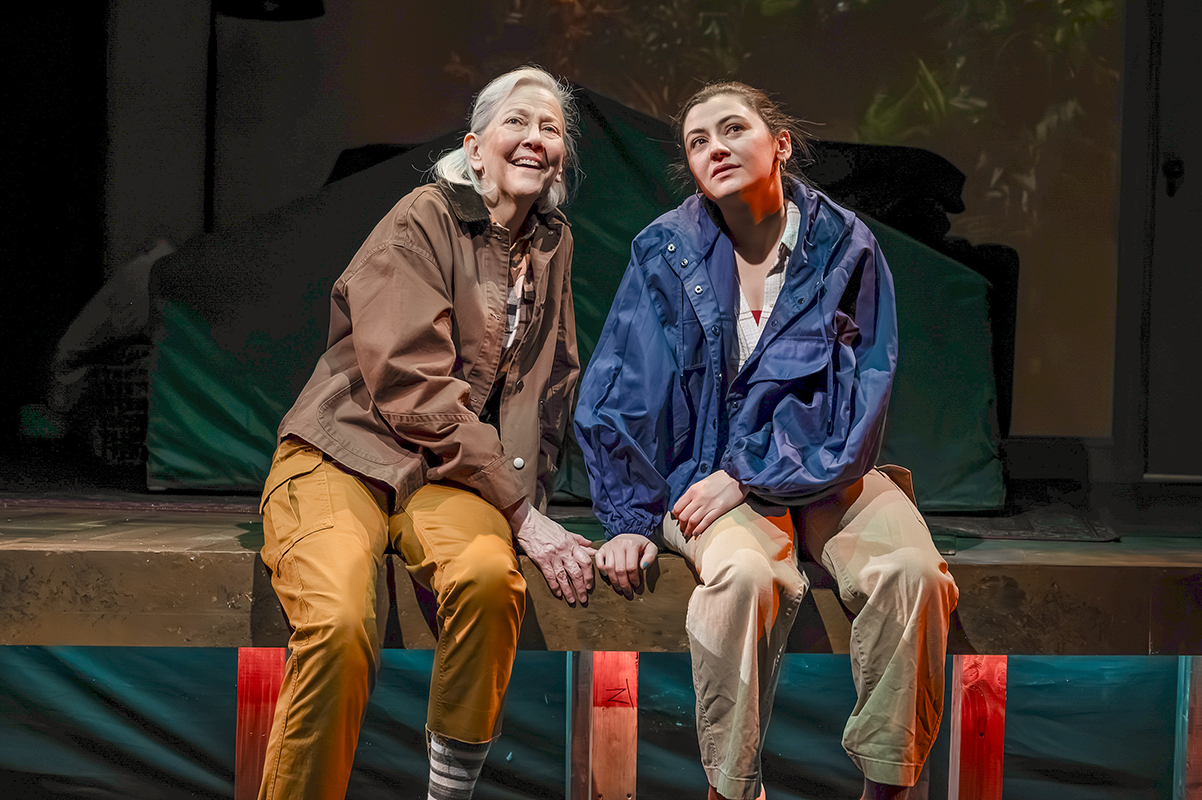
Siblings Q and Z might share parents and a few inside jokes, but they were almost completely different people from the very start in Shayan Lotfi’s dynamic two-hander drama What Became of Us.
Q (Jo Yang), the dutiful older sister, was born to their immigrant parents while still in the Old Country, according to the play’s parlance. Younger brother Z (Stan Kang) was born here in the New Country — wherever here is. The nations remain unnamed, but here would seem to be the U.S., while there might be any number of places depending on what’s implied by the casting.
The play’s world-premiere production at New York’s Atlantic Theater Company in 2024 alternated two casts between performances, one featuring actors of Asian descent, the other, actors of Arab descent. The audience could thus infer from who’s cast something about the Old Country, as well as Q and Z’s family history, culture, and relative progress in the family’s adopted home.
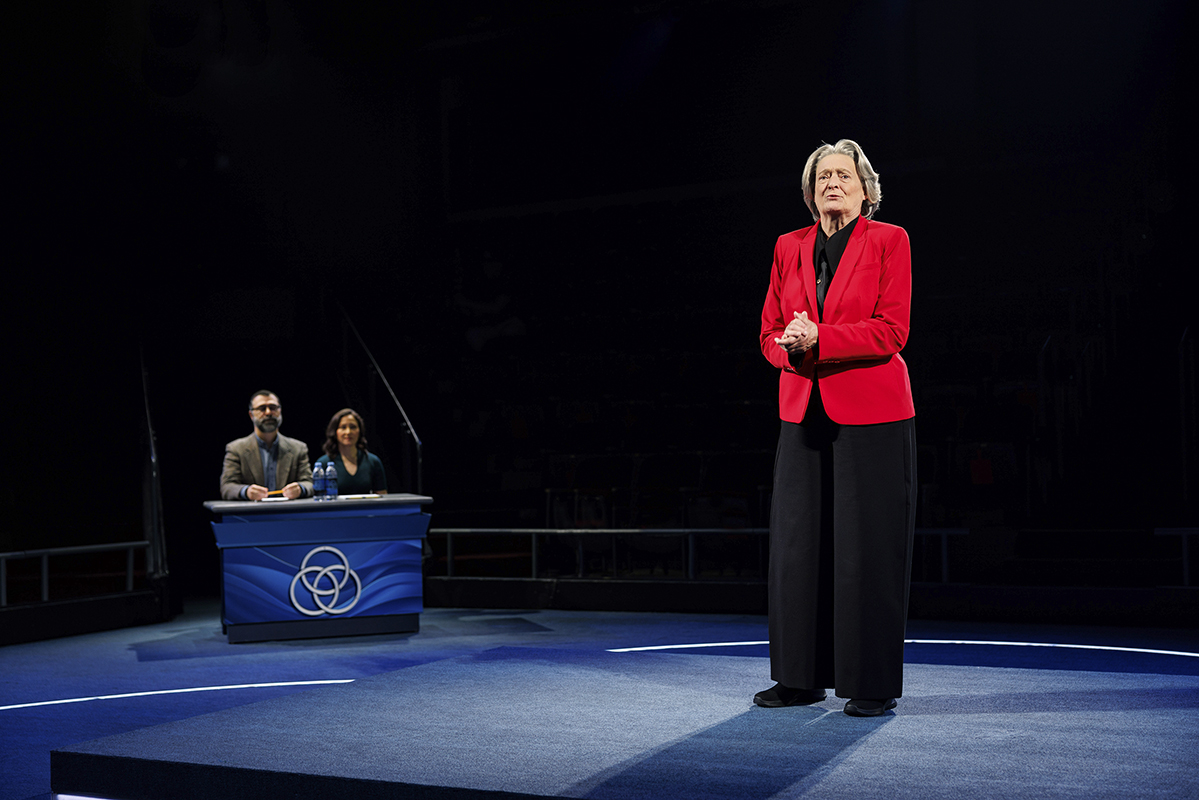
Signature Theatre’s production, directed by Ethan Heard, likewise puts up two casts — Green (Yang and Kang) and Purple (Alma Cuervo and Michael DeLorenzo) — alternating nights onstage.
I’d gladly have seen both, dear reader, as the play runs only 80 minutes or so. But scheduling permitted seeing only one before deadline, the Green cast, who have Lotfi’s intricate script well in hand, for the most part. One wishes Yang had as firm a grip on the lines as she does the character and her place in the largely nonlinear narrative.
Q does have the lion’s share of material, first ushering us into how the evening is going to go, as she ambles around the family home. Designer Chika Shimizu has supplied a cozy, carpeted 20th-century living room strewn with boxes packed with memories to prompt Q’s wistful reminiscing.
Exerting a delicate touch, Yang finds the pathos and humor throughout, starting in Q’s monologue tracing her parents’ journey from the Old Country. A postal worker and a pharmacist, they sold practically everything, and left there seeking better lives, safety and opportunity, and political and economic stability.
They grabbed a piece of what they were looking for here, opening a newsstand, then a corner store. And they had their second child, Z. With his introduction, Z, portrayed by Kang with zeal and sensitivity, joins in sharing recollections of their growing up, and growing apart.

Circling each other, they volley declarative “You” statements back and forth. You misspelled our last name on homework assignments. You got your first period waiting at a bus shelter. You decided to try out cruelty. You didn’t want a birthday party but our parents still had one for you.
Their catalog of memories and callbacks, often accompanied by detailed reenactments, spark shared joy and stoke past grievances. They get under each other’s skin as only close kin can. They recall the disagreement that forever tainted their relationship, and when he confused the whole family by coming out as nonbinary. They both hit a dire low recounting the major fight they had after a family tragedy.
Their ensuing rift is reflected poignantly in the dialogue, which switches to first-person “I” statements for the first time, as Q and Z describe their separate paths through life — as a librarian and a chef, respectively — up until they finally see each other again. The possibility they might never reconcile looms like potential tragedy.
Along the way, their story and connection are gently cradled by Heard’s direction. Moods and perspectives shift sometimes in an instant, or in the patient pause of a more deliberate transition. And in the welcoming intimacy of their family living room, the audience truly becomes part of their interaction, while they work out what they’ve become.
What Became of Us (★★★☆☆) runs through July 26 at Signature Theatre, 4200 Campbell Ave. in Arlington, Va. Discussion Night performance is July 15, and a Pride Night performance is July 17. Tickets are $47 to $100. Call 703-820-9771, or visit sigtheatre.org.


Support Metro Weekly’s Journalism
These are challenging times for news organizations. And yet it’s crucial we stay active and provide vital resources and information to both our local readers and the world. So won’t you please take a moment and consider supporting Metro Weekly with a membership? For as little as $5 a month, you can help ensure Metro Weekly magazine and MetroWeekly.com remain free, viable resources as we provide the best, most diverse, culturally-resonant LGBTQ coverage in both the D.C. region and around the world. Memberships come with exclusive perks and discounts, your own personal digital delivery of each week’s magazine (and an archive), access to our Member's Lounge when it launches this fall, and exclusive members-only items like Metro Weekly Membership Mugs and Tote Bags! Check out all our membership levels here and please join us today!




You must be logged in to post a comment.