
LGBTQ Candidates Make History in Blue Tsunami
Chris Pappas becomes the first openly gay man elected to the U.S. Senate as LGBTQ candidates score historic victories nationwide.

On Tuesday, America elected its first openly gay male U.S. senator, Chris Pappas, as voters from coast to coast sent Democrats to Congress in what some pundits have labeled a “blue tsunami.”
Pappas, who currently represents New Hampshire’s 1st Congressional District in the southeastern part of the state, beat back a strong challenge from former U.S. Sen. John Sununu (R-N.H.), who briefly surged into the lead in some polls this summer. Ultimately, however, the state reverted to its Democratic lean, with Pappas romping to a 14.3-percentage-point margin of victory over his Republican opponent, with over 90% of the vote counted.
Pappas will join U.S. Sen. Tammy Baldwin (D-Wis.), who is a lesbian, as one of only two out LGBTQ members of the U.S. Senate.
In his victory speech, Pappas referenced tens of millions of dollars spent against him by Republican-affiliated super PACs, including some connected to Trump apologist Elon Musk, as reported by The Guardian.
“Tonight’s results are a wake-up call for corporate special interests and billionaires who have been rigging the economy, for the cowards in Congress who have enabled healthcare cuts, tariffs and war — and for the incompetent president who can’t even be bothered to care how people are being hurt,” Pappas told the crowd at his victory party. “Tonight, voters in New Hampshire, and all across the country, simply have had enough and are demanding a change in direction.”
Nine of the 13 incumbent LGBTQ members of the U.S. House of Representatives, all Democrats, were reelected with ease on Tuesday. Of the remaining four, Pappas moves on to the U.S. Senate; U.S. Rep. Angie Craig (D-Minn.) ran for U.S. Senate but lost her primary; U.S. Rep. Everton Blair (D-Ga.), who won a special election to finish the unexpired term of former U.S. Rep. David Scott, will not return next year; and U.S. Rep. Julie Johnson (D-Texas) was a victim of a Republican-backed mid-decade redistricting effort.
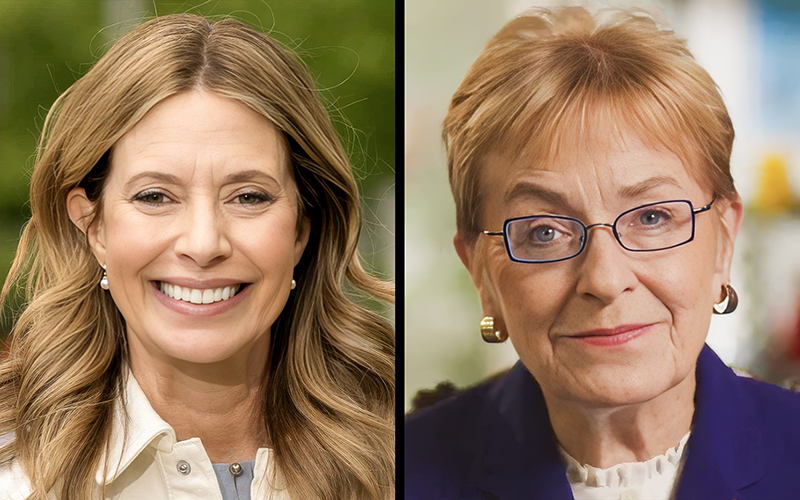
However, as many as seven other LGBTQ individuals are poised to serve in the next Congress. Janelle Sarauw won her election to represent the U.S. Virgin Islands as a nonvoting delegate. Michigan’s Jeremy Moss and Indiana’s J.D. Ford won their elections to Congress. Ford unseated incumbent U.S. Rep. Victoria Spartz (R-Ind.), an upset in a race that most pundits had rated “likely Republican.”
Additionally, out LGBTQ candidates JoAnna Mendoza (D-Ariz.), Cait Conley (D-N.Y.), Marni von Wilpert (D-Calif.) and Scott Wiener (D-Calif.) are leading their respective races, which some outlets have called but the Associated Press has not. If all four win, LGBTQ representation in the House would rise to 16 — its highest number ever.
In the governors’ races, lesbians Tina Kotek (D-Ore.) and Maura Healey (D-Mass.) won their reelection bids.
There were also historic LGBTQ wins in state legislative races. In Georgia, Bentley Hudgins won a seat in the state House of Representatives, becoming the first out transgender and nonbinary person elected to the Georgia General Assembly.
In Alabama, voters elected Allison Montgomery as the state’s first out transgender representative, despite high-ranking Republican Party officials attacking her gender identity and waging a nasty campaign implying that trans people are mentally ill and pose a threat to children.
On a broader scale, Democrats’ flip of the U.S. House of Representatives and pickup of at least seven U.S. Senate seats — which could rise to nine if they emerge victorious in yet-to-be-called races in Alaska and Mississippi — mean that the anti-LGBTQ riders frequently attached to must-pass legislation will likely have little traction for the next two years.
With control over their respective chambers, presumptive Democratic Speaker Hakeem Jeffries (D-N.Y.) and presumptive Senate Majority Leader Chuck Schumer (D-N.Y.) will be positioned to use procedural rules to keep anti-LGBTQ provisions from reaching a vote. Blocking such amendments would allow vulnerable incumbents or Democrats representing Republican-leaning states or districts to avoid taking on-the-record positions on LGBTQ issues that could provoke a backlash from conservative voters.
Additionally, with 54 to 56 seats, Democrats will not be reliant on Pennsylvania Democratic U.S. Sen. John Fetterman — who some Democrats have fretted will either defect to the GOP, block legislation favored by left-leaning and liberal groups out of spite, or vote to confirm Trump appointees and right-wing judges to curry favor with the president — to maintain their majority or pass measures requiring only a simple majority.
It remains unclear whether the filibuster will remain in effect — meaning 60 votes would generally still be necessary to end debate on most legislation and allow a final floor vote. Some Democrats have called for eliminating the filibuster, arguing it gives the minority party outsized influence over the Senate and allows it to grind business to a halt.
More from Metro Weekly:










You must be logged in to post a comment.