Lt. Gov. Dan Patrick (left) – Photo: Office of the Lieutenant Governor
Texas Lt. Gov. Dan Patrick (R) is under siege from a deluge of phone calls, emails or letters opposing his pet project, the so-called “Texas Privacy Act,” which would force individuals to use public restrooms based only on their biological sex at birth. But Patrick is dismissing the criticism as fear mongering by the political Left.
According to the San Antonio Express-News, Patrick’s office has received more than 10,000 types of correspondence opposing the act, also known as SB 6, compared to just 200 calls, emails or letters supporting it. Still, Patrick’s spokesman attributes the lopsided margin to an “orchestrated phone and email campaign organized by the left wing.”
By comparison, Texas Gov. Greg Abbott (R) has received more than 800 emails, letters and messages since last summer, with opinion largely evenly divided as to whether or not transgender people should be restricted from using bathrooms that match their gender identity. House Speaker Joe Straus (R-San Antonio) received 200 pieces of correspondence during that time, most of which opposed any push for further transgender bathroom restrictions.
A number of people who contacted the three Republican leaders cited their own political leanings as Republicans when expressing opposition to a measure like the Texas Privacy Act.
“I was voting Republican before you could spell it. This is stupid. Do I wear my birth certificate and driver’s license on my shirt before I make a bathroom call or do I just drop my pants before I go in so that someone can check the plumbing?” one rancher wrote in an email to Abbott’s office. “I don’t vote for stupidity. Don’t expect another vote from me if you support this.”
But public polls seem to paint a contradictory picture of where Texans stand on the issue. Patrick has cited a poll by Baselice & Associates from November, which asked whether it should be illegal for a “man” to enter a public women’s restroom, locker room or shower. Sixty-nine percent of Texans supported making that illegal, although there was no specific mention of transgender people in that poll.
A memo from the polling firm said that support didn’t change when people were told “some business groups say that passing a law to prohibit men in women’s restrooms would look discriminatory and hurt business,” while also adding that Texas lawmakers were concerned about sexual predators. In other words, the poll was heavily biased in favor of Patrick’s position in the way it worded the questions.
That said, another poll, from the University of Texas and Texas Tribune, which was conducted in October, found that a majority of Texans want transgender people to use restrooms based on their birth gender rather than their gender identity. Among Republicans, that number increases to more than three-in-four.
Patrick’s spokesman, Alejandro Garcia, told the Express-News that the polling data “stands in sharp contrast to this orchestrated phone and email campaign organized by the left-wing after a misinformation blitz targeting Senate Bill 6. The vast majority of Texans support the Texas Privacy Act and are counting on the lieutenant governor’s leadership in getting the bill passed. We have not requested that supporters call or email our office.”
While opponents of the bill have urged their contemporaries to contact their elected officials to express opposition, the person who holds the key to whether the bill could pass is Straus. Given Patrick’s support of SB 6 and the ideological makeup of the state Senate, it is likely the measure will pass easily. But more Texas House members, including a number of Republicans, are wary of taking any action that might make them a target of economic boycotts similar to those unleashed on North Carolina after the passage of its controversial HB 2 law.
According to the official tally received from Straus’ office, the House Speaker received 174 calls or written communications opposing the idea of legislating transgender people’s access to public restrooms, two calls opposing discrimination in general, and seven comments and calls supporting the idea that serves as the basis for the Texas Privacy Act.
Straus has previously dismissed the bathroom bill as a distraction that “could make Texas less competitive for investments, jobs and the highly skilled workforce needed to compete.” In a speech at a legislative conference sponsored by the Texas Association of Business in January, Straus said: “We want to continue [our state’s economic] success and we want Texas to keep attracting the best and the brightest. One way to maintain our economic edge is to send the right signals about who we are.”
New Hampshire Republican Gov. Kelly Ayotte has vetoed, for the third time since taking office last year, a bill seeking to bar transgender people from bathrooms and other spaces that align with their gender identity.
The "bathroom bill" seeks to carve out exceptions to New Hampshire's 2018 Law Against Discrimination, which prohibits discrimination based on sexual orientation and gender identity. The measure was signed into law by former Republican Gov. Chris Sununu.
As reported by the New Hampshire Bulletin, the bill would allow business owners to bar transgender people from restrooms or locker rooms that align with their gender identity, permit female-designated sports teams to exclude transgender women from competition, and allow jails and prisons to assign housing based on a person's sex assigned at birth.
A Clovis, New Mexico, man was arrested on federal charges after allegedly posting threatening comments targeting a Pride festival in nearby Lubbock, Texas.
According to the U.S. Department of Justice, Michael Kenneth Thompson, 44, allegedly made the threatening comments on June 27 in response to a Facebook post about Lubbock Pride Fest 2026 published by the Lubbock Avalanche-Journal.
In response to the post, numerous Facebook users -- many from West Texas and New Mexico -- disparaged LGBTQ people, labeled them "mentally ill" or sinful, or called for the festival to be "burned down."
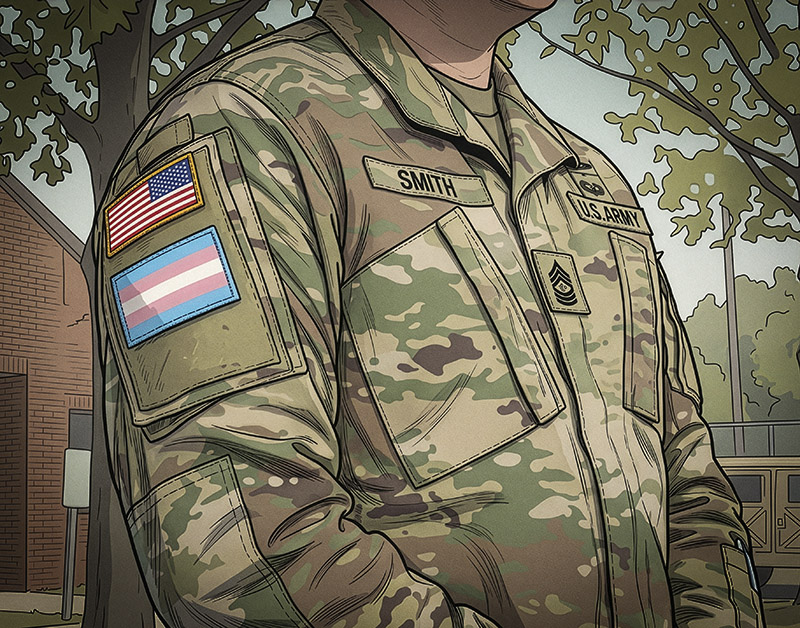
A federal appeals court has ruled that the Trump administration illegally discriminated against transgender service members by banning them from serving in the U.S. military.
The 2-1 ruling from the U.S. Court of Appeals for the District of Columbia Circuit found that the Pentagon's prohibition on transgender service members -- adopted to comply with a January 2025 executive order issued by President Donald Trump -- was designed to exclude people from military service based on their gender identity.
These are challenging times for news organizations. And yet it’s crucial we stay active and provide vital resources and information to both our local readers and the world. So won’t you please take a moment and consider supporting Metro Weekly with a membership? For as little as $5 a month, you can help ensure Metro Weekly magazine and MetroWeekly.com remain free, viable resources as we provide the best, most diverse, culturally-resonant LGBTQ coverage in both the D.C. region and around the world. Memberships come with exclusive perks and discounts, your own personal digital delivery of each week’s magazine (and an archive), access to our Member's Lounge when it launches this fall, and exclusive members-only items like Metro Weekly Membership Mugs and Tote Bags! Check out all our membership levels here and please join us today!










You must be logged in to post a comment.