
Roz White is Commanding in Mosaic’s ‘Lady Day’
Roz White illuminates Billie Holiday's blues in Mosaic's moving production of "Lady Day at Emerson's Bar & Grill."

Billie Holiday is onstage dwindling before our eyes, struggling to sustain the fire that brought her to this moment. She’s already told her audience, “You can only get to where you’re at by way of where you’ve been,” and this iconic performer has been to hell and back — whorehouses, prison, addiction, heartache — but she’s still here, barely.
The Billie Holiday portrayed in Lanie Robertson’s Lady Day at Emerson’s Bar & Grill comprises a fascinating, tragic triple image, a performance of a performer performing the role of someone who isn’t still messed up on heroin.
Declaring herself “the new Billie,” Lady Day enters prepared to bare her soul. It’s 1959, and at this point in her turbulent life and career, her troubles have become infamous — she has nothing left to hide. Yet, she still tries damn hard to fool us, and perhaps herself.

Old habits die hard, especially for an addict, and Holiday is caught between confessing her sins and covering up her vices, a tension that animates Reginald L. Douglas’s gripping production of Lady Day that opens Mosaic Theater’s 10th anniversary season.
That spiraling tension rides on the performance of Roz White, a vocal powerhouse who impresses with her dramatic take on the role, as Holiday performs at this South Philly nightspot in what might be her last ever live show. Registering vulnerability and grit, humor, sadness, and stubbornness, White’s Lady Day commands the room with songs and stories.
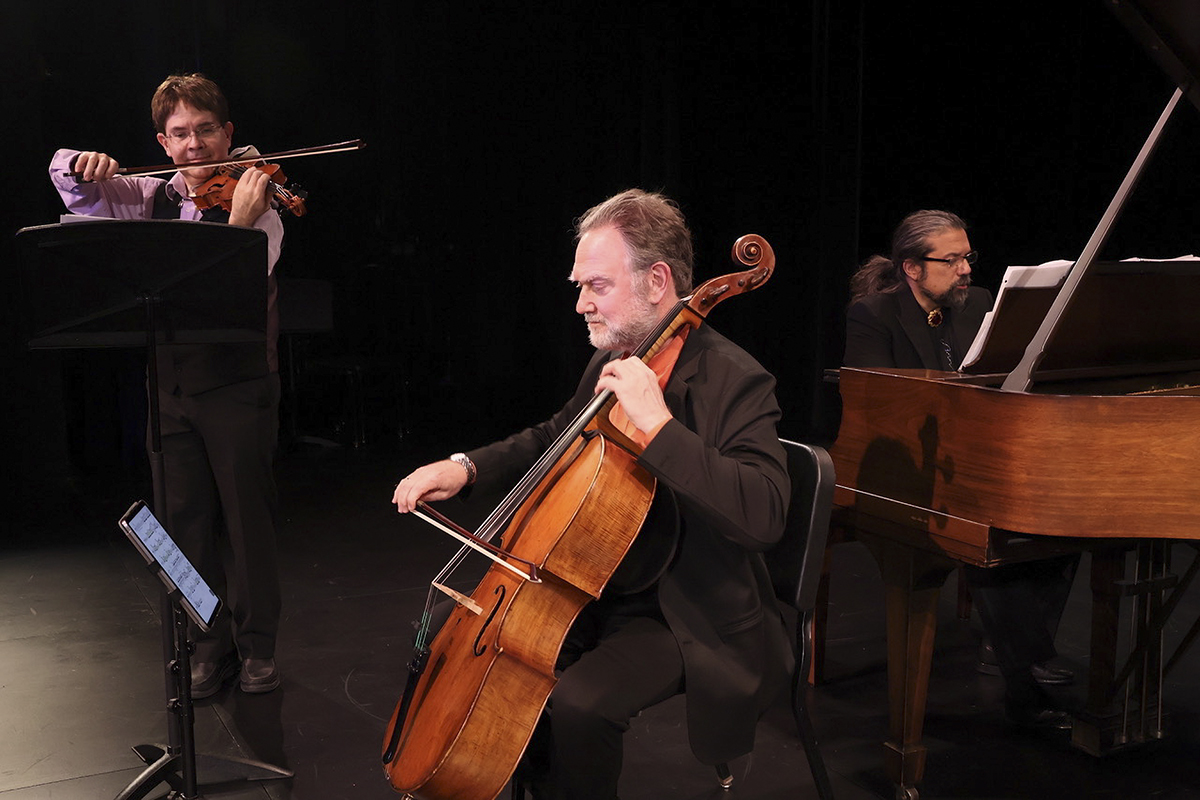
Backed by her band — a trio led by music director William Knowles on piano — Holiday performs hits from her catalog while constantly digressing into tales of her past, like her stint in prison, and multiple marriages and divorces. Being in Philly brings back memories, she says. She and Emerson’s have history.

The production’s immersive presentation, transforming the theater into Emerson’s Bar & Grill, evokes a room with history. Scenic designer Nadir Bey’s brick wall backdrop sets us inside a basement blues bar, an intimate nightclub filled with table seating surrounded by plush banquettes, the whole house bathed in the amber of Jesse Belsky’s lighting.
When White is burning up a number like “Gimme a Pigfoot (And a Bottle of Beer),” one could forget this isn’t an actual nightclub show. White doesn’t really sound like Holiday — she’s more brassy than honey smooth — but handily conveys the mood and meaning of the songs, as in the shift to regret and reflection in “God Bless the Child,” or the melancholy in a snippet of “Foolin’ Myself.”
White glides more surely through the mix of styles and tempos than the band, which sounds stiff at times, like they’re having a hard time staying as loose as Lady Day. Of course, at a certain point, Holiday really loosens up with an offstage hit of heroin that slowly sinks her into a stupor, resulting in some of White’s most arresting work.
Carefully underplaying as Holiday gets sloppier on the stuff, White delivers a believably stoned run through “T’ain’t Nobody’s Business If I Do,” the song Holiday claims as her total philosophy. To the end, the legend vows to live defiantly, a self-proclaimed jazz singer who channels the blues with a passion that pierces the darkness.
Lady Day at Emerson’s Grill (★★★☆☆) runs through Oct. 13 at the Atlas Performing Arts Center, 1333 H St. NE. Tickets are $42 to $80, with discount options for each performance. Call 202-399-7993, ext. 2 or visit www.mosaictheater.org.




You must be logged in to post a comment.