Suzy Eddie Izzard in Brighton England – Photo: Amanda Searle
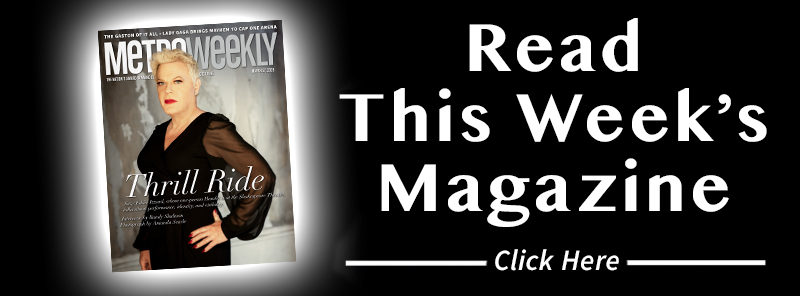
A conversation with Suzy Eddie Izzard is like trying to keep pace with a runaway train — exhilarating, relentless, just barely containable. Ideas tumble out at speed, veering from Shakespeare to history to personal reflection, all delivered with the charisma that has defined her decades-long career across stand-up, stage, film, and television. It’s a thrill ride.
Barreling from topic to topic with a kind of manic precision, the glamorous Izzard brings a joie de vivre to her delivery that doesn’t fully translate on the page — the sense that each answer is its own performance, unfolding in real time.
The actor brings her critically acclaimed one-person Hamlet to the Shakespeare Theatre Company’s Klein Theatre for a limited run through April 11. Adapted by her brother Mark and directed by Selina Cadell, the production offers a bold solo take on Shakespeare’s most famous tragedy.
“Eddie Izzard, the performer, was somebody that I grew up being dazzled by as an astonishing example of invention, imagination, spontaneity, humor, charisma,” says STC’s artistic director Simon Godwin. “Hosting somebody who plays all 23 characters in Hamlet and inhabits many different bodies is a very meaningful and inclusive act that not only serves Shakespeare, but also shows us new ways of animating his extraordinary text.”
Izzard, who is transgender and genderfluid, is flexible about names and pronouns — she/her and he/him are both acceptable, as are the names Suzy and Eddie.
“I’m absolutely proud to be part of the community,” she says during our Zoom interview. “Trans people are here, trans people are real, trans people are being honest about themselves.”
She’s clear-eyed about the current political backlash facing the transgender community, but ultimately optimistic.
“Head towards the truth of how you’re feeling,” she says. “The more visible people are, the more people go, ‘Oh, there’s hundreds of thousands, there’s millions.’
“This is our time of fighting. When I came out [in 1985], there was not a hint of a word about anything. We were just non-people, toxic people, and not part of society. Now we are definitely part of society. And some people may disagree with us or want to change laws, but they won’t stop people from being their authentic selves. And if we’re telling the truth, that’s got to be so much better than other people of other persuasions telling lies.”
Eddie Izzard Hamlet – Photo: Amanda Searle
METRO WEEKLY: Hi Suzy, how are you?
SUZY EDDIE IZZARD: I am very good, thank you. Yes, I’m very good. Having just passed performance 230, so our production of Hamlet is in very good shape. The audiences are acting very positively. We’ve got some great reviews now, all adding up. We’re going to hit performance 250 while we’re in D.C. So that’s going to be a wonderful place to be. And then go on to Australia, New Zealand, London, and then looking to India and through Europe. Anywhere and everywhere!
There’s a thing in performing. I’m not sure if you were an actor at any point, but some people, if they do a long series of performances, they can get stuck into a certain tonality — each line comes out the same way. It goes into a prayer-like form. And they lose the immediacy of being in it. I discovered this thing you could do in drama of driving down an emotional corridor. You can lean into certain sections of a scene, or you can pull it back from it. You can drive words in a different way, which if you’re playing up against another actor, it could throw them, and they’d go, “Whoa, you didn’t do it that way yesterday.” But if you’re playing against yourself, it’s perfect.
So I keep the material molten — molten emotion. That’s what I’m doing with the performance so that it stays fresh.
MW: Did you say molten?
IZZARD: Yes. Molten. Keeping it fluid and being able to move it night to night, performance to performance. I can discover things that people wouldn’t normally do. At drama school, they say, “Now this is how you approach this, this is how you approach that.” And obviously, they’ve been through years, decades, maybe even centuries of trying things out to say, “This is how we do it.” But if you haven’t got that, you don’t know what’s right and what’s not right to do. So you do it in a different way. Not everyone’s going to agree with certain things that anyone does.
Alexander Fleming came up with penicillin because his assistant saw the Petri dish where the culture had died, and he said, “Oh, that’s ruined the culture.” But Fleming thought, “Well, what killed this disease thing here — what’s this mold? Can’t we turn that into a pill?” Boom, penicillin! Thinking out of the box.
So, yeah. I hope that if Shakespeare were around, I think he would be positive on what we’re doing because visceral is the thing we’re fighting for — visceral. Because that’s one thing I’m sure about.
I know you haven’t asked a question yet, and I’m just answering many different questions, but I am sure that Shakespeare and Marlowe and Kyd and Ben Jonson, anyone who writes plays, you want people to be affected by it and laugh and cry. And you want the emotions, you want it visceral. You don’t want an audience going, “What is that? What are they talking about? I don’t get this.” You just don’t want that.
Somewhere in over four hundred years since Shakespeare’s time, certain people have got maybe to a place where they say, “This is how it’s done.” There’s the idea of “spinach theater.” I don’t know if you’ve heard of that phrase, but the idea of it’s good for you but it’s not really cooked spinach. I think this is because raw spinach in a salad is very nice.
MW: I like spinach.
IZZARD: Well, then it’s all good for you. You are just lapping it all up with a big spoon. Didn’t you do that thing? I did this thing to my mom. I remember this. My mom died when I was six. So I remember in Northern Ireland, I must have been four, say, and I was saying, “Popeye, spinach. It’s necessary.” She’s going, “You won’t like it.” She got tin spinach. So you like the tin spinach? Well, do you like how it’s cooked in restaurants, or do you like it the way it was done when we were at school?
MW: Well,I guess I don’t like canned spinach.
IZZARD: No, it’s horrible!
MW: The only canned vegetable I will eat is corn.
IZZARD: Because you can’t muck it up!
MW: I’m not sure how we got here, but I want to go back to Hamlet. I’ve got to be honest with you, I haven’t seen it. But I have a concept of it. Still, I’d like you to explain it to me.
IZZARD: Well, you’ve seen Hamlet before, maybe, yeah?
MW: Many times.
IZZARD: Well, as you probably know, a lot of people are doing solo performances these days. I think it gives people more control, more agency over what they can do. I’m just one of a group of people who are doing solo performances. I wanted to act from the age of seven. I saw a play. My mom had died two years before, and I was almost turning eight, and I saw this play and some kid on stage — one kid in particular — was getting a very good reaction. And I thought, “I need this.”
I think I’ve analyzed it as a substitute of the audience’s affection for my mother’s affection, who was a very loving mother. And so I pushed hard to get into plays at school. I got [the role of] third spear carrier, second spear carrier, fourth spear carrier, person who helps the spear carrier.
I’m dyslexic as well. So sight-unseen auditions, my Lord, just are not good for me. And they thought, “Well, you’re a bad actor.” So I just realized that I could concentrate on comedy. It seemed easier because you could set up your own program. Dropped out of uni doing accounting and financial management, and I went off to break through and be in a [Monty] Python-like group on television by the time I was 25. That wasn’t working.
I became a street performer. I was comedy, comedy, comedy, comedy. Eventually, when I’m 30, my standup starts taking off and then I decide to get a separate acting agent and push for drama. I wanted to do harder work that would really test me and push me to limits rather than, “Oh, you’re coming from comedies so do comedic roles.” And I didn’t want to do that.
And then I thought, “Let’s do Shakespeare,” because it intimidated me as a teenager — I found it really difficult. Again, my dyslexia didn’t help. But I thought, well, I don’t think this is for me, and I will just concentrate on comedy.
When I did Great Expectations as an audiobook, I realized I could use this technique, which I developed in comedy, of playing one character, then talking to another character, then changing back — it’s all over my comedy. People talk to each other. I think four was the most I got talking to each other.
And I realized I could do that for drama. So having done an audiobook for Great Expectations, I decided, let’s do a performance. I developed a performance of Great Expectations. My brother [Mark Izzard] did the adaptation for that, and I started in New York to great reactions and then to London as well. And before that, I’d already decided I should do Hamlet this way because it will give me the chance to put it on rather than ask someone, “Can I play Hamlet? Will you back me to play Hamlet? Would you let me?” So I did it this other way around. And as a solo performance, you could play Hamlet, and you have to do Ophelia and Gertrude. So that’s what I did.
MW: Hamlet is notoriously long. How long is this show?
IZZARD: It’s about two hours. It’s about an hour and 15, first half, and about 45 minutes, second half.
MW: How did you and your brother decide what to cut out?
IZZARD: My brother went in — he’s the academic of the family — and said, “We don’t need this. Let’s make this story work.” And I said this to Selena Cadell, my director, “Let’s make the story work so that kids from nine to ninety are getting a visceral performance with a story that makes sense. So that’s how we have done it. We’ve approached it as a visceral play to have the same reaction as audiences did in 1601.
MW: There is a good core human drama in Hamlet.
IZZARD: And a weird one as well, where Hamlet’s father says, [at the] end of act one, “Avenge me,” and Hamlet takes four more acts to avenge him. And then he does it by accident. As I said to my director, who was saying Hamlet’s an anti-hero, “He’s not an anti-hero. He’s actually an accidental hero.”
And the technique of Shakespeare to keep saying, “What am I doing? Am I a coward? I’m so useless. My dull revenge.” A ghost turns up, the ghost of his dad, and says, “Are you going to get on with this?” Because I think Shakespeare realizes that if you’re going to hold this and hold this and hold this and hold this end out for so long, you’ve got to have the character saying, “What is going on? Why am I not getting on with this?” We want it to work so that people leave going, “I get it. I see it. I feel it.”
MW: Do you feel any particular pressure with regard to the soliloquy almost everybody knows, “To be or not to be”?
IZZARD: My director was saying, “This is your Hamlet. You got to make it your Hamlet.” And I knew that idea that your ego has to step up to this. But for some reason, I don’t know, maybe because I was a little bit older when I came to it, I’d asked Ian McKellen, “Is there a cutoff age for playing Hamlet?” And he said, “Nope, nope, just do what you want.” This was before he did his [performance] at 81. The first time I did it live in front of a paying audience, I could feel bells ringing, I could feel ding dong!
MW: Is there an advantage to being a transgender actor and being able to fully encompass both the male and female parts?
IZZARD: Well, hopefully so. That’s what I said. “Can I bring honor to both the male and female characters?” And as you all know from Hamlet, having seen it, Ophelia and Gertrude are underwritten. They just are. But we know that back in the ages, men had way more agency. Elizabeth I was one of the few women who could have as much agency as she wanted to because she’d gotten to the Queen level. So yeah, I think being a trans person, it helps you in a solo show. It absolutely does.
MW: You’ve done Great Expectations and now Hamlet. Is this going to be an ongoing project? Are you thinking of adapting other works?
IZZARD: Not at the moment. Not at the moment. I’m enjoying being in Hamlet. I want to keep performing that around the world.
MW: Solo shows are challenging for an actor. I have to imagine that your extensive career as a standup helped you adapt to being the only person on stage for two hours.
IZZARD: That is absolutely right. I have the confidence of standing on stage and not thinking, “Oh, wish someone would come in and would take the load of the show off me.”
MW: You can come out as trans in the early nineties.
IZZARD: I came out to the press in 1991, and journalists were going, “Are you really trans?” And I go, “Yes.” I just started talking about it, and then I started throwing on a dress, and then I looked a mess. That’s what journalists started saying. “Oh, you are trans, but you look a mess.” “Thank you. Okay, I’ll try and work on that.” I had to try and get my visual look to swing together, and then it just went on from there.
But it was January of 1985 when I told everyone in the house, I was in a shared house, and I told my brother, and I told people who were still back in Sheffield when I was at university that I was trans.
MW: What was the reaction at the time?
IZZARD: Everyone was cool. Even certain people I thought were not going to be cool were cool. I mean, I do hang out with more progressive people, so maybe that’s to be expected. But people were negative in the streets, saying horrible things, shouting at me. I just shouted back. “You fucker!” “Oh, fuck you and fuck you!” So sometimes it was about five minutes of just them screaming obscenities at me and me batting back with obscenities at them. One or two fights in the streets. I was always feisty.
MW: You’ve gone on the record saying you believe that being transgender is genetic.
IZZARD: Yes, I believe that it’s a built-in thing. We know chromosomes are XX and XY. They’re not XX and YY. So we already know that. We know that all fetuses are female, and then some get coded male. We know the male nipples are only there because they could have been breasts. We know that the testes and the ovaries are the same thing, but they get coded in different ways. But we get obsessed with the separation. How do you define a woman? How do you define a man? How do you define a human? That’s the most important thing.
Look at tigers. If you’re getting attacked by a tiger, you don’t go, “It’s a female tiger. It’s a male tiger. I can’t be sure. I just don’t know.” And the tiger’s not bothered, either. It’s “I’m attacking a man. It could be a woman. I can’t tell what I’m attacking, but they’re really tasty.”
So we get obsessed with the difference, but other animals are not obsessed. And if you analyze what is masculinity and femininity — I tried to do a list of this, and there’s almost nothing you can put in one line and not the other line. Women are caring and men can be really caring, too. Some women were S.S. guards, so obviously they weren’t caring. So you can get horrible women, horrible men, wonderful women, wonderful men. You can cover it. It’s a spectrum. Just go with the spectrum, and then everything falls into place. You don’t need to get so het up about things.
MW: I read a quote from you in 2004 where you said, “I’m a straight transvestite or a male lesbian.”
IZZARD: I fancy women. That’s the thing. I am a trans woman and I fancy women. I don’t fancy men. And I’ve tried to fancy men, but it doesn’t work. I couldn’t write words of love about another man. I just couldn’t do it. I love my brother, my father, but that’s a different love.
What I’m sure of is that I didn’t choose it. I didn’t say, “Hey, I’ll be a trans person. That seems a good idea.” Seeing as I fancy women, it’d be so much easier for me to lie.
And lying has been done by quite a lot of politicians recently, of more right-wing persuasion. But I actually said “Let’s be honest about this” back in 1985. So I salute the idea of LGBTQ people saying, “This is the truth of how I do feel internally. And maybe if we get it out and discuss it, maybe we get to a better place than lying about it our entire lives.” How many people their entire lives have lied — lied like that down back through the millennia? We are lucky enough to be of a generation where it was easier to come out because of work done by previous generations.
I remember talking to someone who had come out, and they said they sometimes regret it because it’s tough. I never regretted it. And also, it affects the roles that you can do. People said, “Oh, you came out last year, because you said you’re Suzy and go by she/her.” I said, “No, I came out 40 years ago. I just decided to move into a she/her preference.” Even though, as you might’ve seen my statement on this, that I prefer Suzy, I don’t mind Eddie, and I prefer she/her, but I don’t mind he/him. You can’t get it wrong with me unless you call me Arthur or Sabrina or something that’s completely different. I’m heading towards Suzy Eddie Izzard. That’s where I’m heading towards. So Eddie is staying there.
MW: Eddie is a brand for you.
IZZARD: Yeah.
MW: So many transgender people are, justifiably, strict about being deadnamed. What is different about you that allows you to be so casual with it?
IZZARD: Well, because I’ve always said I’m gender fluid. I feel I’ve got a mixture of boy and girl genetics. At this stage of my life, I’m preferring to present myself as I do and live as a trans woman, but I am gender fluid. In the spectrum, there’s certain attributes that are male and female. I do know it’s to treat other people as you’d like to be treated yourself, and we must be brave and curious and not fearful and suspicious. So these are my political maxims that I will fight for. Everyone should stand up for themselves and, as I say, be their authentic selves.
Suzy Eddie Izzard in The Tragedy of Hamlet runs through April 11 at The Shakespeare Theatre Company’s Klein Theatre, 450 7th St. NW. For tickets, visit shakespearetheatre.org.
To learn more about Suzy Eddie Izzard and for upcoming tour dates, visit eddieizzard.com.
The word and feeling for dance this season is "immersive," as companies and artists throughout the DMV invite audiences to fully experience the joy of motion, whether you're watching from your seat or joining in the movement. A preponderance of performers promise interactive dances, games, and environments for viewing the classics, discovering experimental new visions, or just finding community in music and culture, be it Bhangra and Bharatanatyam dance or ballet and beatboxing. So dive in, immerse yourself, and let the rhythm move you.
Racing driver Daniel Dye has been indefinitely suspended from NASCAR after making homophobic remarks about a rival driver.
According to ESPN, Dye was penalized for mocking IndyCar driver David Malukas during a recent livestream. In a video that circulated on social media, Dye used exaggerated voices -- including an imitation of Malukas -- in a way that suggested Malukas might be gay.
Malukas, 24, drives for Team Penske and frequently posts photos with his girlfriend on social media. There is no indication that he is gay.
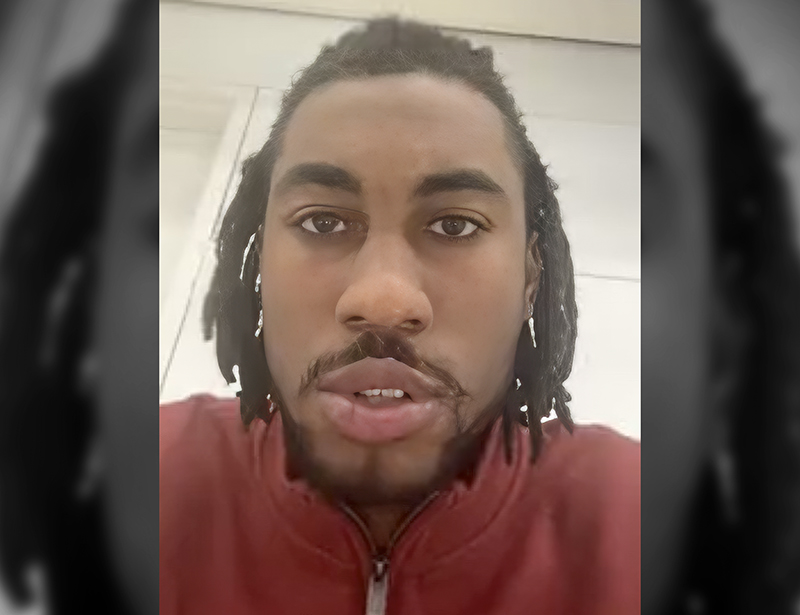
The Chicago Bulls have waived guard Jaden Ivey for "conduct detrimental to the team" after he posted a lengthy social media video rant expressing anti-gay sentiments, including opposition to Pride Month.
The Bulls acquired the 24-year-old Purdue alum, the fifth overall pick in the 2022 draft, from the Detroit Pistons before last month’s trade deadline. He averaged 15.8 points, 3.7 rebounds, and 4.5 assists across 151 of 164 games to start his career, but knee issues limited him to 30 games last season and sidelined him for the first 15 games this year.
These are challenging times for news organizations. And yet it’s crucial we stay active and provide vital resources and information to both our local readers and the world. So won’t you please take a moment and consider supporting Metro Weekly with a membership? For as little as $5 a month, you can help ensure Metro Weekly magazine and MetroWeekly.com remain free, viable resources as we provide the best, most diverse, culturally-resonant LGBTQ coverage in both the D.C. region and around the world. Memberships come with exclusive perks and discounts, your own personal digital delivery of each week’s magazine (and an archive), access to our Member's Lounge when it launches this fall, and exclusive members-only items like Metro Weekly Membership Mugs and Tote Bags! Check out all our membership levels here and please join us today!







You must be logged in to post a comment.