
Noel Gordon: The Next Generation Awards 2015
“When I first came out as gay,” Noel Gordon recalls, “one of the first things my mother said to me was, ‘I don’t want you to get AIDS and die.’ And that was the image that I had in my head of what it meant to be a gay person in America — that you get HIV and die.”
As a result, Gordon developed a “very contentious relationship with sex. It was certainly something that I feared.” Yet instead of running away from the fear, Gordon ended up facing it head on. While a student at the University of Michigan, he started learning more about HIV, including the fact that “the new and emerging face of HIV is of people who look like me or come from the same background as me — a young black gay man from a household that didn’t really discuss sex, or discussed it in a really negative and shaming way.”

As a result, HIV/AIDS continues to be such a problem because of a lack of proper sex education and HIV awareness — and less because of a closeted, down-low phenomenon, which Gordon says has been blown out of context. “The more I learned, the more my passion for the subject grew.” Gordon worked at an HIV/AIDS resource center while in college, and then upon graduation made an “HIV service trip” to Jamaica, where he taught more than 50 people, from elementary children to adults, the basics of HIV prevention and treatment.
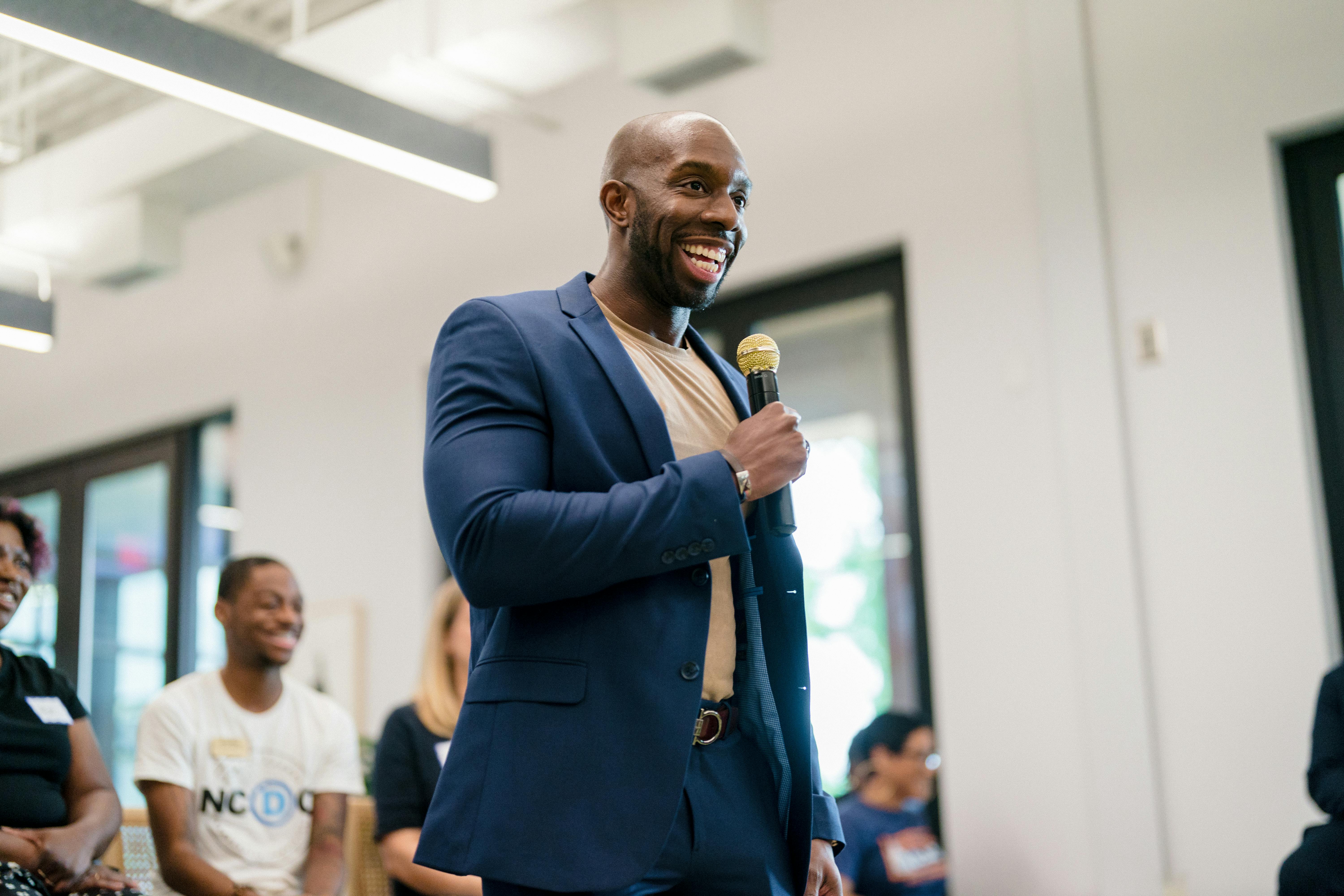
Now working at the Human Rights Campaign, Gordon plays a lead role in the organization’s public education and awareness efforts on HIV. This includes managing two social media campaigns, the general awareness-focused #BeInTheKnow and #DailyBlue, highlighting the promising — if somewhat controversial — HIV prevention regimen known as Pre-Exposure Prophylaxis, or PrEP.
His work has earned Gordon praise from leading HIV/AIDS advocates across the country, as well as accolades from the National Black Justice Coalition, which recently named him to its list of “100 Black LGBTQ Leaders to Watch.” It’s also now garnered him a Next Generation Award, which he finds particularly inspiring, since he admires several previous recipients. “For me to be a part of that lineage of folks who have won the award is really outstanding. It’s a tremendous honor.”
Gordon grew up in a small suburb of Las Vegas in a “loving, affirming household where I was always encouraged to speak up.” The oldest of three children, with two younger half-sisters, he was named after his Jamaican father — Noel Augustus Gordon. It was his Jamaican heritage that enticed Gordon to take his HIV service trip there, despite the country’s reputation as one of the most homophobic and violent places in the world. He worked with several local LGBT advocates with whom Gordon continues to keep in touch. “I feel passionately about them and also about making sure that people understand the complexity of Jamaica.”
Despite a loving, nurturing upbringing, Gordon admits it was a struggle coming out in his devoutly Christian family and to his mother, originally from Panama. “Thankfully over time…we’ve gotten to a place where now my mother is one of my biggest supporters. It’s been a really great evolution.”
As a kid, Gordon thought he’d grow up to become a lawyer — specifically a prosecuting attorney like Jack McCoy on Law & Order. But at least for now he’s more inspired by his work in advocacy and in D.C. to even think of anything else. “D.C. is a great place to be young, gay and progressive. There are tons of other young people here trying to make the world a better place — and have fun while doing it. That’s sort of the mantra that I try to live by.”
Indeed, Gordon lives by that mantra by playing in a Stonewall Kickball league, volunteering with organizations including Casa Ruby and SMYAL — and by being “a proud PrEP user” for the last year.
“Taking PrEP has only made my life better, in so many ways. If anything it’s made me think more proactively about my sexual health and wellness.” It has also emboldened him in his work in HIV prevention and awareness and in his interactions with other men. “What’s great about PrEP is it has the ability to build bridges between gay men, really anyone who’s HIV negative or positive. [It fosters] an open and candid conversation about how we can protect each other and how we can protect ourselves.”




You must be logged in to post a comment.