Trans Pride flag – Photo: torbakhopper, via Flickr.
The Montana House Judiciary Committee voted largely along party lines to approve HB 113, a bill that would prohibit transgender youth from accessing any medical treatments intended to aid in a gender transition and effectively gag doctors from recommending treatments that may be in their patients’ best interests.
The bill, sponsored by State Rep. John Fuller (R-Kalispell), would penalize doctors or nurse-practitioners who prescribe hormones or puberty blockers to transgender youth who have been diagnosed with gender dysphoria. Any provider who does so could be fined anywhere from $500 to $50,000 per infraction.
Fuller’s legislation also prevents surgical interventions, even though most doctors specializing in transgender health care already discourage transgender youth from undergoing surgery before 18 except in very rare cases.
What the bill would do, in practice, is not just delay care for transgender youth, but censor medical providers through intimidation. Out of fear of being fined or facing other disciplinary measures, medical providers could refuse to correctly diagnose a child with gender dysphoria, or even acknowledge or affirm a transgender youth’s gender identity.
LGBTQ advocates worry that bills like Fuller’s, which have been introduced in a slew of Republican-led legislatures this year, will simple increase feelings of isolation and suicidal ideation among youth.
According to The Trevor Project’s 2020 National Survey on LGBTQ Youth Mental Health, more than half of transgender or nonbinary youth have seriously considered suicide, more than 3 in 4 experience extreme anxiety, and more than 2 in 3 experience sever depression.
Research dating back to 2015 has shown that gender-affirming medical interventions, such as hormones or surgery, lowers the incidence of suicidal ideation among transgender teens.
Other factors reducing risk of suicide include greater parental and social support, fewer incidents of discrimination, being recognized according to their gender identity, and having personal identification documents that match their identity.
“HB 113 is based on a basic misunderstanding of transgender youth and the decades of research and medical experience showing that this best-practice medical care is in their best interest,” Sam Brinton, the vice president of advocacy and government affairs for The Trevor Project, said in a statement. “This type of best-practice medical care for transgender youth simply delays puberty until young people are old enough to make their own decisions about their gender identity.”
Brinton added: “This bill aims to take choices away from patients and parents by preventing them from accessing gender-affirming health care, which we know from research can lead to positive effects on body image, overall psychological well-being, and reduced suicidality.”
A recent national survey conducted by The Trevor Project last year found that over 90% of LGBTQ youth said political trends — specifically anti-LGBTQ actions or legislation — negatively influenced their wellbeing.
According to a Morning Consult poll, three-quarters of transgender youth reported heightened feelings of loneliness and isolation, which typically contribute to depression and suicidal ideation, since the start of the COVID-19 pandemic last March.
Fuller’s bill now heads to the full House for a vote, where it is likely to pass in the Republican-dominated chamber. In past years, when Montana had a Democratic governor, LGBTQ advocates could rely on a veto to block the bill. But newly-elected Gov. Greg Gianforte, a Republican, amassed an anti-LGBTQ record in Congress prior to his election, and is not considered an ally to the LGBTQ community.
The Judiciary Committee approved the medical intervention bill just a day after approving a measure — also sponsored by Fuller — that prohibits transgender people from competing in sporting events other than those designated for the gender that matches their assigned sex at birth.
Caitlin Borgmann, the executive director of the ACLU of Montana, said both of Fuller’s bills would cause “irrevocable harm” to transgender youth in the state if passed.
“We’re disappointed to see that the House Judiciary Committee is more interested in passing hateful laws than supporting trans youth in Montana,” Borgmann said in a statement. “As these bills move to the floor of the House, we hope lawmakers listen to Montana business leaders, medical professionals and associations, religious leaders, parents, and trans youth and oppose these harmful bills.
“If these discriminatory bills pass — we will sue, and we will win. Trying to defend laws in court that stigmatize and target trans youth doesn’t seem like a good use of taxpayer dollars to us.”
Former U.S. Sen. Sherrod Brown, a Democrat seeking a return to the Senate from Ohio, is pushing back against an attack ad claiming he supports gender-affirming surgeries for minors, calling it false and attacking Republican opponent Sen. Jon Husted for voting to block the release of the Epstein files.
Brown lost his seat to Republican Bernie Moreno in 2024, despite outperforming Democratic presidential nominee Kamala Harris in Ohio by more than seven percentage points. He is now challenging Husted, who was appointed to the Senate rather than elected.
Brown's race is a key contest in Democrats' effort to regain control of the Senate, making him a target of conservative political action committees desperate to defeat him and preserve the Republican majority.
Policies related to gender identity rank lowest among the issues American voters consider important to their vote in next month's midterm elections, according to a CNN poll.
Conducted by independent research company SSRS, the poll surveyed 1,206 U.S. adults online and by telephone September 16-17, including 867 registered voters. The margin of sampling error is plus or minus 3.5 percentage points for all adults and 4.1 points for registered voters.
The poll asked respondents to assess President Donald Trump's job performance and his handling of specific issues. Registered voters were also asked which party's congressional candidates they favored and which issues would influence their vote.
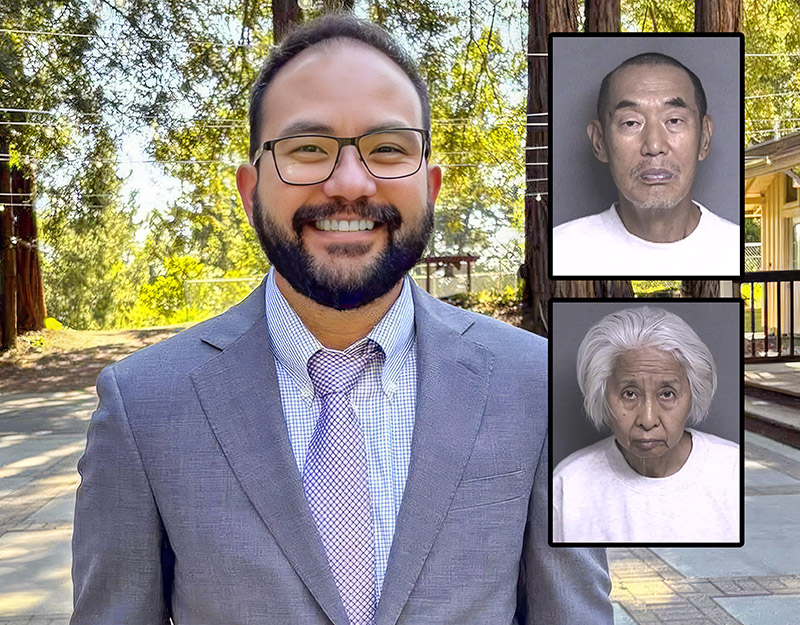
Jonathan McKinsey, a transgender engineering executive at The New York Times, was allegedly killed by his estranged wife's parents on September 26 amid a contentious custody dispute.
McKinsey, 40, the Times' head of engineering and games player experiences, was shot multiple times shortly after 3 p.m. at Dublin Sports Grounds in Dublin, California. He was pronounced dead at the scene.
Responding to calls from witnesses, Dublin police arrested Shouyong Zhang and Shili Chen, both 77, the parents of McKinsey's estranged wife, Candice Jang, reports NBC News.






You must be logged in to post a comment.