Midway through Antoine Fuqua’s obsequious new Michael Jackson biopic, Michael, Joe Jackson calls a meeting of the Jackson 5, the era-defining family band he both managed and literally fathered. It’s 1979, and things have changed: Michael’s landmark album Off the Wall has catapulted him to solo stardom. No longer a child star, he has surpassed his brothers both creatively and commercially.
Joe wants to retake control. Addressing his sons behind an opulent wooden desk, looking more corporate executive than father figure, Papa Jackson (an imposing Colman Domingo) presents his plan for a Jacksons comeback: a new tour and live album. “The Jackson family is the brand,” Joe barks. “That’s our Coca-Cola, and we need to start selling!” Michael, hurt by his father’s domineering demands, storms out.
The scene illustrates the emotional conflict at the center of Fuqua’s gleaming theme park of a movie: Michael’s desire to seek creative autonomy and break away from his father’s paternalistic control. But if Joe Jackson is the tyrannical villain of Michael and Michael (played by real-life nephew Jaafar Jackson) the misunderstood hero, the deeply confused film can’t help but reflect the older man’s brand-oriented worldview. Here is a movie that sanitizes Michael Jackson’s legacy, elides those distressing allegations, presents him as a troubled if lovably eccentric genius, and repackages his catalog for maximum profit by the beneficiaries of the Jackson Estate.
Our story begins in mid-sixties Gary, Indiana, where steel worker Joe Jackson, a patient zero for the malevolent stage parent, is molding his five boys into a musical sensation. Fronted by the boyish voice and infectious charms of young Michael (Juliano Krue Valdi), The Jackson 5 becomes a hit at local talent shows, then clubs, then regional tours.
Joe says things like “In this life, you’re either a winner or you’re a loser” and whips Michael when he gets slack about rehearsing. The elder Jackson’s drill-sergeant tactics pay off when the brotherly band hits it big and lands a record deal with Motown. (There, Michael meets Berry Gordy, a father figure he seems more fond of than his real dad.) We get the requisite montage of Jackson 5 hits, and soon the family has upgraded from Indiana to a palatial estate in Encino, California.
The story skips ahead to 1979: Michael’s going solo with Off the Wall and leaving his bandmates in the dust. Naturally, there are “Don’t Stop ‘Til You Get Enough” and “Workin’ Day and Night” needle drops to remind you that the man’s post-Jacksons/pre-scandal catalog really was that good. He’s now portrayed by Jaafar Jackson, whose performance is plainly imitative: He nails the androgynous voice and dazzling footwork, but gives little sense of MJ’s interiority beyond his tremendous ambition and childlike nature.
Speaking of childlike nature, Michael’s growing eccentricities are played for laughs. He seems to relate to animals and children more than adults. He befriends a kid in a checkout line with talk of video games. He brings home a pet chimp, Bubbles, and then a giraffe, baffling his siblings. There are multiple comedic sequences where Bubbles is just roaming around MJ’s house, causing trouble. On the bright side, there are some thrilling setpieces recreating significant moments in Michael’s early career, from the Motown 25 concert where he debuted the Moonwalk to the audacious “Thriller” video shoot where he bossed around John Landis. The music sounds phenomenal; the dialogue, not so much.
During the pivotal stretch between Off the Wall (1979) and Thriller (1982), Michael meets a young lawyer, John Branca (Miles Teller in a horrid wig), and hires him as his attorney. Branca really believes in Michael, you see — “I believe there’s no one like you,” he tells the singer — and is soon tasked with firing Michael’s father for him. Branca, who is a co-executor of Michael’s estate, comes off exceptionally well in this film; he is also credited as its producer. Probably just a coincidence, though!
Michael: Colman Domingo – Photo: Glen Wilson
Of the supporting performances, Domingo’s is the only one imbued with real stakes and presence. He persuasively embodies Joe’s mix of megalomania and insecurity. Mostly, in screenwriter John Logan’s telling, secondary characters exist purely to feed Michael bland pep talks or crush his spirit. As matriarch Katherine Jackson, Nia Long is given little to do besides deliver rote Hallmark-isms like “You have a very special light… And you have to let your light shine.”
Ultimately, Michael is too busy squeezing cheap laughs out of the giraffe in the room to address the elephant in the room: the multiple child abuse allegations that dogged Jackson during and after his lifetime. Reportedly, the film was to devote much of its third act to the 1993 scandal (presumably with the aim of exonerating MJ), but the filmmakers were forced to scrap those scenes and shoot a new ending due to an overlooked clause in a settlement with one of the star’s accusers. The new climax, in which Michael commands an ecstatic crowd during the Bad tour, is musically exhilarating but dramatically inert. It feels like an arbitrary end point, as if to insist: “Nothing to see here; it’s all smooth sailing for MJ after this!”
Look, an estate-sanctioned MJ biopic was never going to grapple seriously with the allegations. But did this one have to constantly draw our attention to Michael’s preoccupation with children? After his 1984 Pepsi commercial injury, we see the star in a burn ward, comforting injured kids, then telling Branca he wants to find a way to help those kids. And must there be so many scenes of Michael reading or referencing Peter Pan? Knowing what we know, these recurring motifs leave an undeniably sinister taste.
In recent years, I’ve written about the unending glut of music biopics, and I’ve argued that they “feel less like auteur-driven cinema than estate-sanctioned exercises in brand management.” Michael takes this trend to a dismaying extreme. It is, in the end, not so much a movie as a two-hour commercial for a legacy catalog, a nostalgic montage in search of a story.
Michael (★★☆☆☆) is rated PG-13 and is playing in theaters nationwide. Visit fandango.com.
By the grace of good timing, both Anne Hathaway and Michaela Coel have better movies out this season than David Lowery's tiresome drama Mother Mary.
Those talented actresses, their fans, and certainly their agents, should be glad if audiences catch their work in The Christophers or The Devil Wears Prada 2, and not just this pretentious, if lushly designed, go-nowhere glimpse behind the curtain of pop superstardom.
Hathaway and Coel aren't the problem. They are fully committed to whatever it is that The Green Knight writer-director Lowery intends in depicting the emotionally fraught reunion between Mother Mary (Hathaway), a Lady Gaga-Dua Lipa-coded pop diva, and Sam Anselm (Coel), the fashion and costume designer whose eye-popping looks helped define Mary's image earlier in her career.
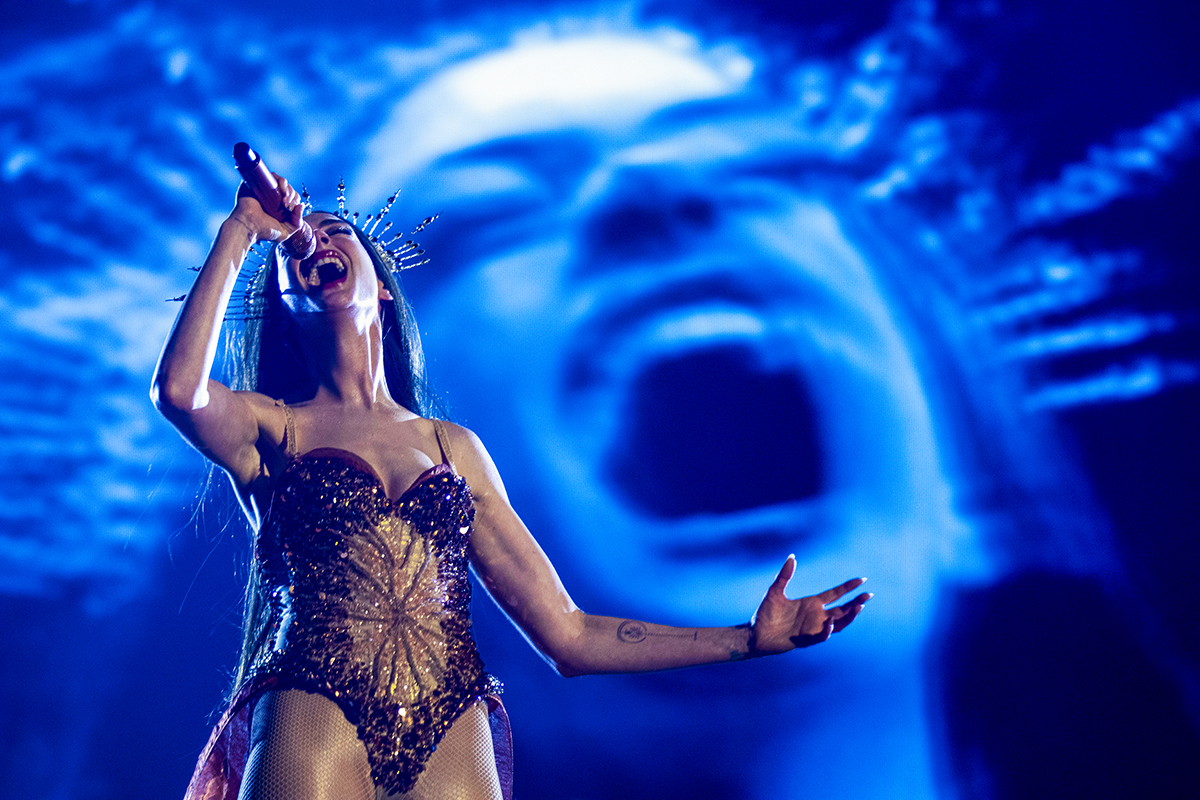
Ladies might still love Cool James, but they've found a place in their hearts for their girl Cardi B. Single ladies, married ladies, ladies who love ladies, all kinds of grown-and-sexy ladies were at Capital One Arena for the D.C. date of the Grammy-winning rap diva's "Little Miss Drama Tour."
Yes, plenty of guys, and gays, pulled up, too, but it was "the ladies!" that Cardi addressed most often once she took the stage a Madonna-like ninety minutes past the advertised start time (said with love, no shade, from one who's seen Madonna on tour four times).
Pre-show, the Cap One crowd got a good warmup from the track-suited DJ spinning hip-hop and R&B. Although, based on my section -- and the lady in super-short schoolgirl attire twerking on her man while strangers shouted, "Work, bitch!" -- people came already warmed up by other means.
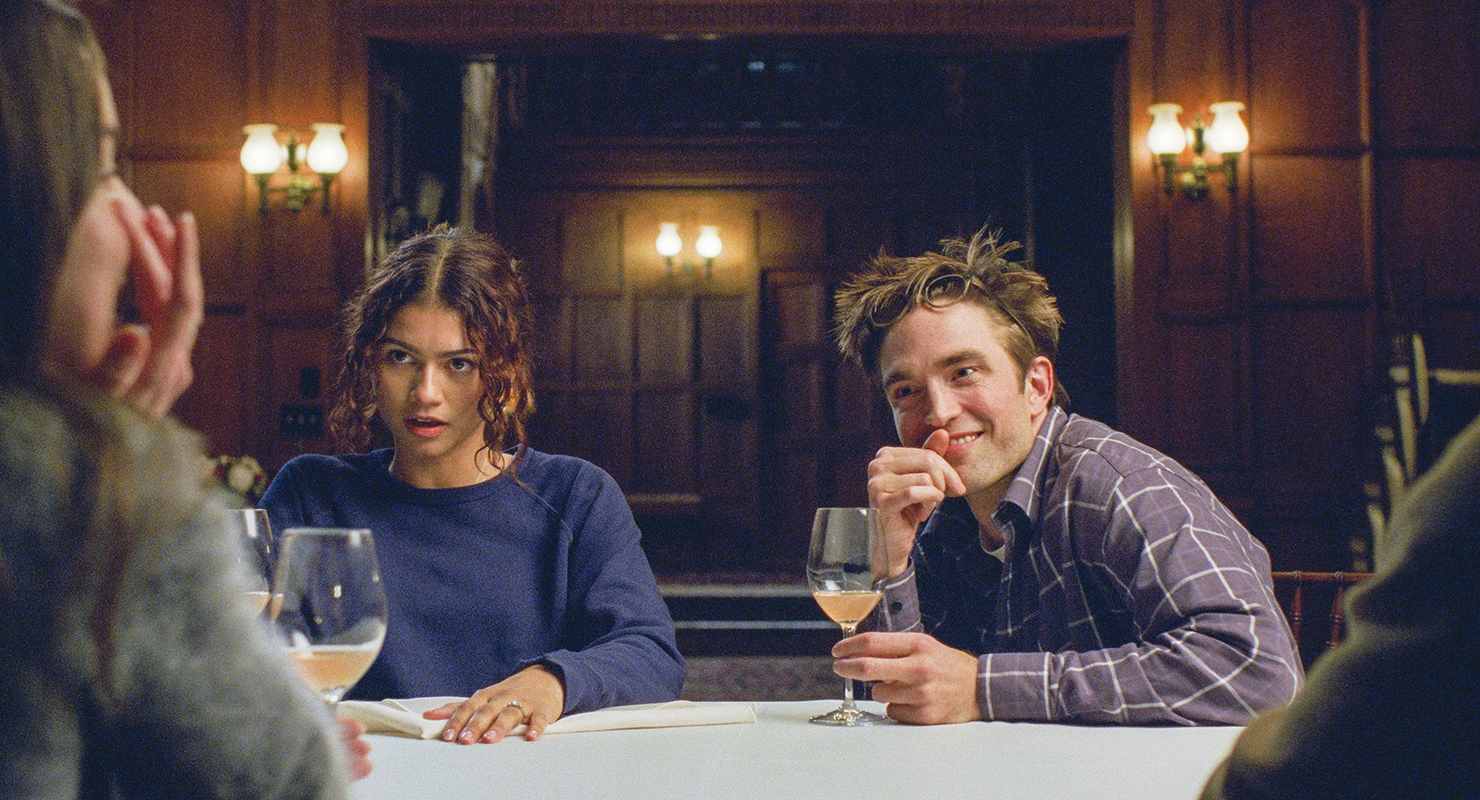
Lesson number-one for prospective brides and grooms: if you feel tempted to play a game of Truth-or-Dare right before your wedding day, just don't. Emma and Charlie learn that lesson the hard way in The Drama, a wickedly funny comedy from Norwegian writer-director Kristoffer Borgli (Sick of Myself).
The engaged couple, truth be told, play a slightly different game of true confessions. It goes horribly awry after one of them spills a revelation too shocking and disturbing to ignore.
The confession lights a fast-burning fuse on a stick of dynamite that might blow up the happy couple's special day, and their whole relationship. Will they or won't they stay together to make it down the aisle?
These are challenging times for news organizations. And yet it’s crucial we stay active and provide vital resources and information to both our local readers and the world. So won’t you please take a moment and consider supporting Metro Weekly with a membership? For as little as $5 a month, you can help ensure Metro Weekly magazine and MetroWeekly.com remain free, viable resources as we provide the best, most diverse, culturally-resonant LGBTQ coverage in both the D.C. region and around the world. Memberships come with exclusive perks and discounts, your own personal digital delivery of each week’s magazine (and an archive), access to our Member's Lounge when it launches this fall, and exclusive members-only items like Metro Weekly Membership Mugs and Tote Bags! Check out all our membership levels here and please join us today!









You must be logged in to post a comment.