Sen. Elizabeth Warren — Photo: Gage Skidmore / Flickr
Democratic presidential candidate Sen. Elizabeth Warren has branded a proposed ban on transgender student athletes in Arizona “cruel.”
Warren responded on Twitter to Republican state Rep. Nancy Barto’s “Save Women’s Sports Act,” which last week was approved by an Arizona House committee and will be voted on over the coming weeks.
The bill, which applies to K-12 schools, community colleges, and state universities, would allow only those assigned female at birth to compete on female athletic teams.
If a person’s gender identity were called into question, that athlete would be required to obtain a doctor’s note proving they are female before being allowed to compete.
The bill would also allow cisgender female students who believe they’ve missed out on athletic opportunities because of transgender inclusion on a school team to file lawsuits seeking redress.
“Trans athletes are not a threat,” Warren tweeted. “We need to protect trans kids — and all LGBTQ+ kids — and ensure they feel safe and welcomed at school. I urge the Arizona legislature to reject this cruel bill.”
Trans athletes are not a threat. We need to protect trans kids—and all LGBTQ+ kids—and ensure they feel safe and welcomed at school. I urge the Arizona legislature to reject this cruel bill. https://t.co/9ALVjeIBiv
Barto previously defended her bill by saying, “Science is what it is. The difference between males and females is obvious.”
Opponents of the bill, including Arizona Democrats, argue that the measure will effectively ban transgender females from participating in sports altogether, as they may not want to compete against cisgender males, and could be putting themselves at risk of abuse or harassment by teammates if they were to compete on male sports teams.
Republicans in Georgia, Tennessee, and Washington state are pushing such bans for the 2020 legislative session.
Shannon Minter, legal director for the National Center for Lesbian Rights, told the Arizona Republic that there is “a reason these bills are popping up simultaneously.”
“There have been no problems with this issue in Arizona. This isn’t responding to an issue that students are having in Arizona. This is a national campaign to use this issue — sadly — to just polarize and divide people,” Minter said.
For Warren, it’s the latest example of support for the transgender community. Last week, she used nonbinary-inclusive terms in a tweet discussing a potential vice presidential pick, and the Massachusetts senator includes her preferred pronouns in her Twitter bio.
I want to tell you exactly the kind of vice president I want: Someone who will be in this fight alongside me for your families. Someone who feels this fight passionately—and who brings his, her, or their own energy to get it done. #CNNTownHall
Warren has also repeatedly highlighted the epidemic of violence against transgender women — particularly trans women of color — in the United States, including reading out the names of women who have been killed and raising the issue of anti-trans violence during Democratic debates.
During a debate in December, Warren and Sen. Bernie Sanders were asked what they would do to “stop violence against transgender people.”
While Sanders pivoted to discussing Medicare for All, Warren pledged to “go to the Rose Garden once every year to read the names of transgender women, of people of color, who have been killed in the past year.”
“I will make sure that we read their names so that as a nation we are forced to address the particular vulnerability on homelessness,” Warren said. “I will change the rules now that put people in prison based on their birth sex identification rather than their current identification.”
She added: “I will do everything I can to make sure that we are an America that leaves no one behind.”
Like other candidates seeking the Democratic nomination, Warren has also committed to reverse Donald Trump’s ban on transgender people serving openly in the U.S. military, branding the ban “shameful” in a tweet last year.
Federal Judge Victoria Calvert has permanently blocked a portion of Georgia’s law banning prisoners from receiving gender-affirming care, ruling on Dec. 3 that the state’s blanket ban on hormone therapy violates the Eighth Amendment’s prohibition on cruel and unusual punishment.
Signed by Gov. Brian Kemp in May and implemented in July, the law bars prisoners from receiving hormone therapy or other treatment for gender dysphoria -- even when a doctor deems it medically necessary. It prohibits the state from funding such care and blocks transgender inmates from paying for it themselves. Non-transgender prisoners, however, may still receive hormone therapy and other gender-affirming treatments so long as the care is not related to gender transition.
A transgender teaching assistant at the University of Oklahoma has been placed on leave after a conservative student accused both the assistant and the course's professor of discriminating against her for citing the Bible in an essay that received a zero.
The student, OU junior Samantha Fulnecky, a psychology major, had been assigned a 650-word essay reacting to a study on whether children's popularity correlates with how closely they conform to prescribed gender norms, reports Oklahoma-based NPR station KOSU.
The study -- Gender Typicality, Peer Relations and Mental Health -- found that popular children are more likely to be described as "gender-typical" by their peers than children who are frequently teased. Among those who are teased, young boys show the worst mental health outcomes.
Dutch authorities say Veronica Clifford-Carlos failed to prove she faces a "legitimate risk of persecution" or threat of physical harm in the United States.
A Dutch court has upheld a ruling rejecting a U.S. transgender woman's bid for asylum, finding she does not face a substantial enough threat of persecution in her home country.
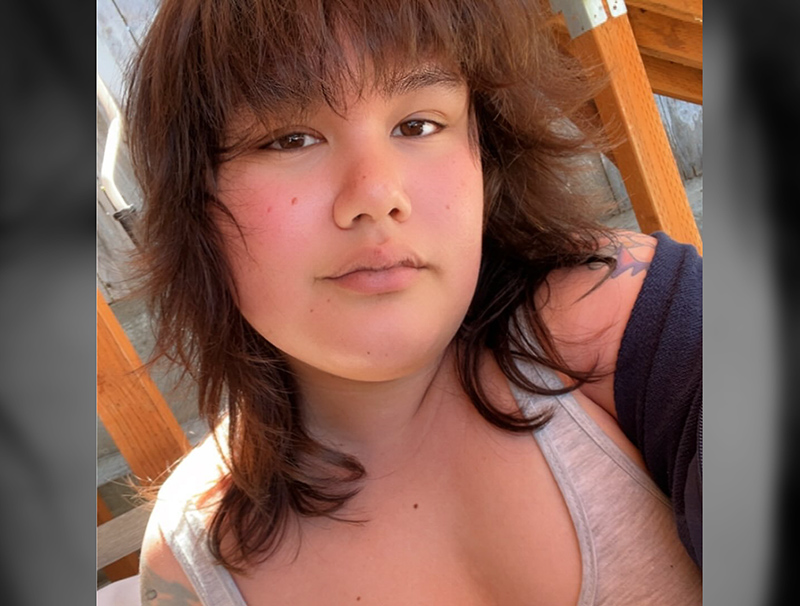
Veronica Clifford-Carlos, a 28-year-old visual artist from California, said she once believed she’d build a life in the United States, but felt compelled to flee after receiving death threats over her gender identity.
Clifford-Carlos left the United States -- leaving behind friends and her dog -- and flew to the Netherlands with her father. Upon arrival, she applied for asylum, telling authorities about the abuse she endured in the United States, particularly after President Donald Trump’s re-election last fall.
These are challenging times for news organizations. And yet it’s crucial we stay active and provide vital resources and information to both our local readers and the world. So won’t you please take a moment and consider supporting Metro Weekly with a membership? For as little as $5 a month, you can help ensure Metro Weekly magazine and MetroWeekly.com remain free, viable resources as we provide the best, most diverse, culturally-resonant LGBTQ coverage in both the D.C. region and around the world. Memberships come with exclusive perks and discounts, your own personal digital delivery of each week’s magazine (and an archive), access to our Member's Lounge when it launches this fall, and exclusive members-only items like Metro Weekly Membership Mugs and Tote Bags! Check out all our membership levels here and please join us today!









You must be logged in to post a comment.