Cured: Frank Kameny — Photo: Kay Tobin via Manuscripts & Archives Division, The New York Public Library
For LGBTQ+ people in the U.S., the road towards liberation has been long, circuitous, dark, and dangerous, and those who have organized and fought for equality often were forced to do so from the safety of the shadows. A new documentary, Cured, making its broadcast premiere on PBS’s Independent Lens series, brings to light a little-known chapter of that struggle, when committed activists stepped out of the shadows to loudly and publicly resist an institution that used fear and ignorance to justify treating queer people as second-class citizens.
It was in 1952 that the American Psychiatric Association (APA) listed homosexuality as a mental disorder in the first edition of its Diagnostic and Statistical Manual of Mental Disorders (DSM). Adding to the public sentiment that gays and lesbians weren’t just different, but were morally deficient, the DSM listing provided a clinical basis for denying queer people basic human rights, from jobs and housing to education and even custody of their children.
Labeling LGBTQ people as “psychologically disturbed” implicitly upheld the discrimination that made it next to impossible for them to live freely and openly. Even worse, the mental illness diagnosis led to thousands of gays and lesbians being committed to mental institutions, or forced into varying forms of therapy, including electroshock treatments, and in some extreme cases, full or partial lobotomies.
Cured — Photo: Kay Tobin via Manuscripts & Archives Division, The New York Public Library
But, as one gay activist argues in Cured, it was this very treatment that posed the greatest danger to his mental health. Gay and lesbian leaders like the late Dr. Frank Kameny, Barbara Gittings, and Kay Lahusen rose up, determined to see homosexuality removed from the DSM listings.
Among the surviving activists interviewed for the film who led the fight, the Reverend Magora Kennedy details how their efforts coalesced around the burgeoning civil rights and feminist movements, while Dr. Charles Silverstein recounts his personal path towards rebellion as a then-schoolteacher who sought psychiatric treatment for years in search of a “cure” for his same-sex attraction.
In the words of Sigmund Freud, there was no cure, as homosexuality was not an illness. It was “no advantage, but nothing to be ashamed of,” he wrote, decades before the DSM was even published. In 1973, the APA decided to remove the listing from the DSM.
“Millions were cured with the stroke of a pen,” says psychiatrist Dr. Richard Green. And, as Cured co-director Bennett Singer points out, “Even though this is a story from history, its lessons remain profoundly relevant today. This is a film about the process of bringing about lasting, systemic social change.”
Cured premieres October 11, National Coming Out Day, on PBS Independent Lens. Visit www.pbs.com.
A Maine ballot initiative that would have barred transgender youth from competing on public school sports teams or using bathrooms that do not align with their sex assigned at birth will not appear on November's ballot.
The referendum was knocked off the ballot on May 26 after Maine Secretary of State Shenna Bellows, a Democratic candidate for governor, ruled that the group behind the measure, "Protect Girls Sports in Maine," had failed to collect enough valid petition signatures to place the question before voters.
A lawsuit has been filed challenging a proposed referendum that would bar transgender athletes from competing on public school teams based on the sex listed on their original birth certificate.
The measure, slated to appear on the ballot this fall, would also require public schools to maintain sex-segregated bathrooms, locker rooms, and changing spaces based on students' birth sex, and allow students who believe they were denied athletic opportunities by a transgender competitor to sue for damages.
But three Maine residents filed suit, claiming supporters of the referendum failed to gather enough valid signatures from registered voters to qualify the measure for the ballot. In their complaint, they say they identified hundreds of duplicate signatures and hundreds more lacking required date information. They also allege that some signatures came from unregistered voters or omitted required residence information.
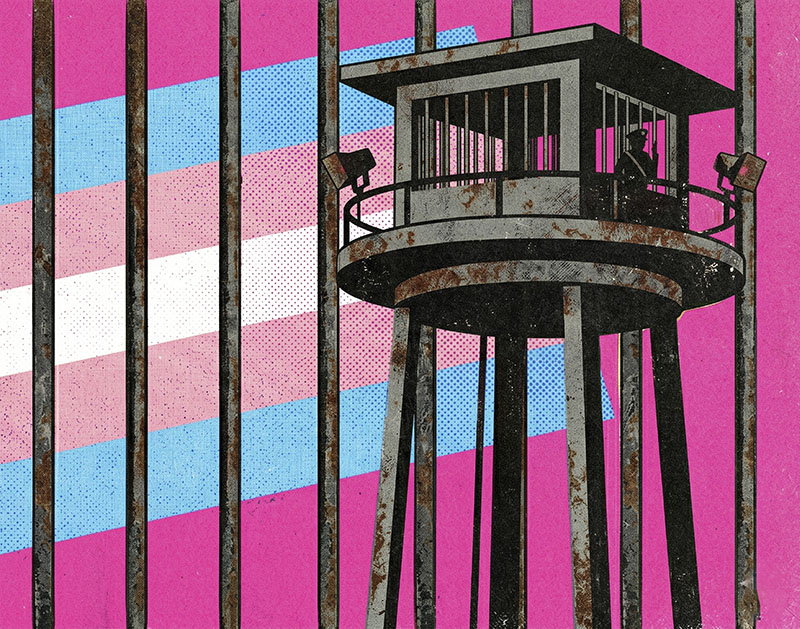
U.S. Magistrate Judge Mark Clarke, of the U.S. District Court of Oregon, issued a preliminary injunction on April 29 blocking the placement of transgender women in men's prisons and ordering the Oregon Department of Corrections to conduct individualized safety assessments for transgender inmates -- directly conflicting with President Donald Trump's executive order requiring inmates to be housed according to their assigned sex at birth.
The case stems from a class-action lawsuit brought by two prisoners on behalf of current and future transgender inmates, accusing the state of failing to protect transgender women from sexual and physical violence by housing them in men's prisons.
These are challenging times for news organizations. And yet it’s crucial we stay active and provide vital resources and information to both our local readers and the world. So won’t you please take a moment and consider supporting Metro Weekly with a membership? For as little as $5 a month, you can help ensure Metro Weekly magazine and MetroWeekly.com remain free, viable resources as we provide the best, most diverse, culturally-resonant LGBTQ coverage in both the D.C. region and around the world. Memberships come with exclusive perks and discounts, your own personal digital delivery of each week’s magazine (and an archive), access to our Member's Lounge when it launches this fall, and exclusive members-only items like Metro Weekly Membership Mugs and Tote Bags! Check out all our membership levels here and please join us today!










You must be logged in to post a comment.