
Trans Day of Remembrance: 62 Lost in U.S., 273 Worldwide
Vigils across the D.C. area Friday will honor those lost, as advocates call for "more than a moment of silence."

Ahead of Transgender Day of Remembrance on Friday, November 20, Advocates for Trans Equality (A4TE) released a report honoring 62 known trans people in the U.S. who died over the past year.
Of those, 28 transgender, gender-nonconforming, or nonbinary people were killed between November 2025 and October 2026. Thirty-four others died from other causes — some known and some unknown.
A4TE notes that the count is likely incomplete, because police, news outlets, and families often misname or misgender trans people after they die, so many of those deaths are never recorded as the deaths of trans people.
The 62 deaths occurred in 30 states and Washington, D.C. When it was founded, Transgender Day of Remembrance focused largely on trans people killed by violence, but over time it has grown to include those who died of natural causes, drug overdoses, or unknown causes.
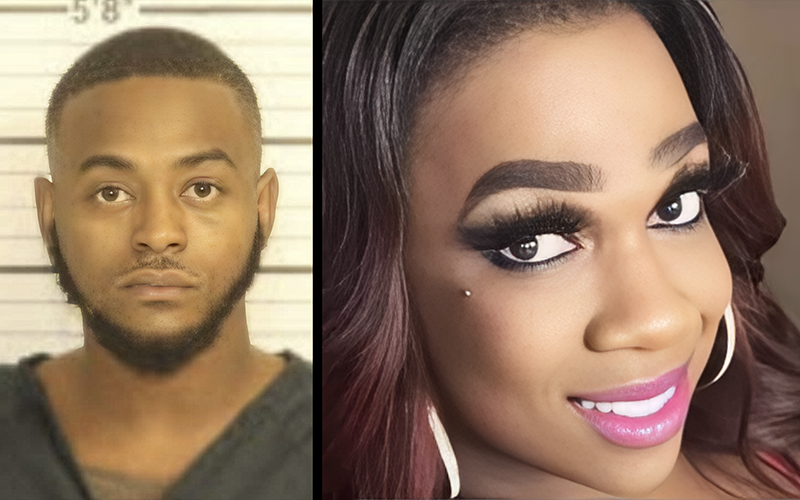
For instance, the report includes the death of longtime trans advocate SaVanna Wanzer from natural causes. It also names Asia Williams and Sophie Lee, two trans women shot to death in Baltimore in June and September, respectively.
“Every name in this report belonged to a person: an artist, a student, a parent, a friend,” Bahari Thomas, A4TE’s director of public education, said in a statement. “As an organization led by and for trans people, we carry the responsibility of remembering them. But trans people — especially Black trans women, who accounted for half of all known violent deaths — deserve more than remembrance. All of us deserve to live long, safe, and full lives, and that requires an end to the policies and political scapegoating that put us in danger.”
Thomas noted that lawmakers across the country have introduced more than 700 bills targeting trans rights or visibility this year. Meanwhile, conservative politicians spent more than $400 million this election cycle on ads demonizing trans people — or attacking candidates for their ties to them, even candidates who weren’t fully supportive of trans rights. Those bills and ads have fed a broader climate of anti-trans hostility.
“We speak the names of those we lost because too many leaders only seem to say ‘trans’ when they need a vote or a villain,” Thomas said. “While our community grieves, we are calling on our allies for more than a moment of silence. Our lost loved ones and everyone who wants to feel safer need to see swift action.”
Internationally, other advocacy groups track the violent deaths of trans people. Trans Europe and Central Asia (TGEU), for example, recorded at least 273 murders of trans and gender-diverse people worldwide over the past year.
TGEU’s Trans Murder Monitoring project found that a trans or gender-diverse person is reported murdered every 32 hours. Over the past year, those murders were reported in 35 countries — the second-highest number since the project began — including Romania and Cameroon, which each recorded their first reported killings of trans people.
A third of those killed were sex workers, the most targeted occupation among the victims. Nearly 95% were trans women or transfeminine people, and close to three-quarters were Black or Brown.
Sixty-nine percent of the murders occurred in Latin America and the Caribbean, with Brazil alone accounting for one in three. Mexico reported 29 murders, Argentina 16 — its highest since the project began tracking in 2009 — and Ecuador 16, its second-highest.
Reported killings in Asia fell from 51 to 32, though TGEU notes that the figure is likely an undercount, since some of its monitoring partners there lacked the capacity to provide data. In Europe, trans murders rose to 13 — the highest total since 2023, and as many as in 2024 and 2025 combined. Most of the European victims were migrants.
The United States accounted for 29 of the murders, about one in 10 — roughly the same as last year.
Victims also skewed slightly older: more than a third were 31 to 40, compared with 21% who were 19 to 25 — the age group that consistently had the most victims during the project’s first decade.
Among known perpetrators, a quarter were current or former partners, lovers, or spouses. Fifteen percent were organized hate groups or gangs, 12% were police or military forces, and 8% were sex work clients. Only 14% of the killings were attributed to total strangers.
“As a Black trans woman and a refugee, I live with the constant fear of losing my life,” Purity Tumukwasibwe, a TGEU board member, said in a statement. “While others go about their daily lives with a sense of safety, Black trans women must remain vigilant, always watching our backs. Our safety is never guaranteed.”
“These murders are not just numbers in a report; they are our friends, colleagues, siblings, parents, and members of our communities,” Tumukwasibwe continued. “As these killings increase year after year, we demand more than sympathy: we demand justice, proper investigations, and accountability for every life taken.”
Advocates are calling on governments to repeal laws and policies that criminalize or restrict trans identities, deny legal gender recognition, limit access to gender-affirming care, or punish trans people for expressing who they are in public. They’re also pushing for hate crime and anti-discrimination laws that protect trans people at work, in school, and in other areas of life.
TGEU in particular has called for better law enforcement training on responding to anti-trans violence, the decriminalization of sex work, and housing trans inmates according to their gender identity rather than their sex assigned at birth.
Vigils honoring those lost will be held around the world on November 20. A4TE, in partnership with the Transgender Law Center, Keshet, PFLAG National, the National LGBTQ Task Force, and the Human Rights Campaign, will host a virtual gathering, “In Loving Memory,” from 6 to 7 p.m. ET.
Locally, Metropolitan Community Church of Washington, D.C., in Mount Vernon Square, and St. Mark’s Episcopal Church on Capitol Hill will hold vigils at 6 p.m. and 7 p.m., respectively. Other area events, all at 6 p.m., include the 18th Annual Northern Virginia Interfaith Transgender Day of Remembrance at Metropolitan Community Church of Northern Virginia in Oakton; vigils at the Equality Loudoun Community Center in Leesburg and the MoCo Pride Center in Bethesda; and a vigil hosted by Maryland Safe Haven at Lawyers Mall in Annapolis.



You must be logged in to post a comment.