“I really like the art of creating a perfectly smoked piece of meat,” says Joe Gera, executive chef and owner of KeyStoNe Cue. His company, based in the Pittsburgh area and in Winston-Salem, North Carolina, specializes in Western North Carolina-style barbecue and offers catering, on-site event services, and restaurant consulting.
“When I’m making ribs or smoking a pork shoulder or anything like that, it is the most calming experience that I can have,” Gera says. “And just being able to listen and smell and know when something’s ready to pull, there’s nothing else like that. You’re following a formula to a certain extent, and a method, but I love being able to see the progress of something from the beginning to the end, and then see people be able to enjoy it.”
For Gera, barbecue is an inexact science. Every cut of meat responds differently to smoke and heat.
“Almost every other piece of food can be manufactured on a mass scale, but barbecue can’t,” he says. “There are people that try, but you can’t do it because every time you get a mass-produced product, you taste it and you’re like, ‘There’s something wrong with this.’ That’s what I love about it: it’s truly more of an art form than a science.”
Gera grew up in an Irish and Italian family in Latrobe, Pennsylvania, about an hour from Pittsburgh. His grandmother, Olga, helped start an arts festival that showcased emerging artists, and his grandfather was an official in the local Republican Party.
Gera attended Wake Forest University in North Carolina before moving to London to study theater and music. He earned a Master of Fine Arts at Drama Studio London and went on to act in the West End. When a serious injury sidelined his performing career, he drew on his undergrad minor in computer science to land a job as a software engineer at Apple.
Gera got his start in politics in college, working for U.S. Rep. John Murtha (D-Pa.). In 1999, he worked on U.S. Sen. John McCain’s (R-Ariz.) presidential campaign and later on the Kerry, Obama, and Clinton campaigns. Eventually, he burned out on politics and turned to cooking and catering.
“My grandmother had suggested, ‘Why don’t you do something that you actually love to do?’ She had been telling me to go to culinary school since I was 12. So I did. I went there for a couple months. I was older than everybody there. They told me the best thing I could do for myself was get a job, and they helped me get a job. And I’ve been cooking ever since.”
A celiac disease diagnosis in 2013 changed the way Gera cooked. “I was sick all the time,” he recalls. “I had no idea what was going on with me. Initially, they thought I had colon cancer. I didn’t. But I ended up at Mayo Clinic, and they put me through a battery of tests over the course of a summer. Finally diagnosed me with celiac disease.”
Over the next decade, Gera — who began cooking under the watchful eye of his grandmother at age four — reworked his family’s recipes for breads, pastas, and other dishes he could no longer eat. He brought those recipes into his business, where, he says, earning the trust of diners with celiac disease helped KeyStoNe Cue thrive.
“I always wanted to have a Bánh mì, but if people can’t eat a Bánh mì, we can make it for them,” he says of the popular Vietnamese sandwich. “Or if it’s a wedding and they have people with inflammatory problems, they’ll call us and say, ‘Hey, can you make these desserts?’ And we’ll say, ‘Yeah, we can do those desserts for you. We can make you gluten-free cheesecakes. We can make you gluten-free wedding cakes. We can do all of that stuff for you.'”
Beyond the kitchen, Gera is a prolific commenter on X under the handle @redhotnerd, where he regularly weighs in on politics. A self-described liberal and a registered Democrat since age 18, he frequently clashes with Republicans and even more often with others on the left, particularly those associated with the Democratic Socialists of America.
“A lot of times they do see with their own eyes what the problem might be,” he says of his sparring partners on the left. “But their diagnosis is wrong. I think that’s where the divide really becomes a problem. Because you take somebody like me, who has experience in professional politics and actually knows how things work. I’ll have a tendency to say, ‘Well, that’s not how that works at all, you guys don’t know what you’re talking about.'”
Gera can be blunt on X, and some of his posts are inflammatory. One of his recurring targets is people he sees as starting with the conclusion they want and working backward to “prove” it.
“They are indoctrinated to a certain degree with a bubble media atmosphere that tells them all of this stuff all the time,” Gera says. “And this is where most of the people like me have a problem — these people are not focused on actually winning and gaining the power that we need to actually materially make people’s lives better. They’re interested in endlessly critiquing and endlessly complaining about the people in power.
“I just wish a lot of these people would just work on campaigns and then learn how stuff actually functions before they start opening their mouths,” he adds. “Anyone can run their mouth about anything that they don’t know about.”
Joe Gera – Photo: Courtesy of Joe Gera
METRO WEEKLY:How do you identify within the LGBTQ spectrum?
CHEF JOSEPH GERA: I guess you could call me pansexual. That would be my identifier, I would imagine. I’ve never really identified myself, to be honest, but that’s where I’m at, I would say.
MW:Did you have a coming out experience?
GERA: Yeah, in college. But I would say it was never an official thing, really. My cousin is a different story, though. My cousin came out to me when we were eight, and she said, “I like girls.” And I said, “Oh, okay, I like girls too.” She’s like, “Oh, no, I like girls.” And I was like, “Oh, okay…”
It took her thirty years. And when she came out, I remember it was a really big deal. I’d kept that secret for her, for her whole life. I just remember her being terrified of my aunt, and I was like, “You shouldn’t be.” I wish where we grew up was more accepting of that, because I think even with my own stuff, I would’ve been more open about it when I was younger. Maybe I would not have had to go through ten years of therapy when I reached my twenties.
MW:Was that an issue for your family? For instance, did you ever bring a same-sex partner home for a holiday?
GERA: No, not really. Even when dating, I had a couple of relationships with some Black women, and I couldn’t bring any of them home because I had some really racist people in my family. That was awful. That was terrible. I had one person that I was going to bring home once, but my grandmother was the only one who would’ve accepted it. And I was like, “Well, I don’t want to do that to anybody.”
I think here’s where the difficulty’s always been. Let’s say you’ve always had relationships with women, you’re very happy with them, and they’re generally heterosexual, and you consider yourself straight, primarily. I don’t think, if given full autonomy over your decisions and over your social surroundings, anyone is really one thing or another. I think we all have a little bit of [straight and gay] in us, depending on where we are. And denying that is a serious problem. I mean, I denied that in myself for fucking decades. But I saw what it did to my cousin, and I remember that since she’s come out — it’s been 10 years now — she is a much happier person.
MW:You hold an MFA from Drama Studio London. What was it that drew you to the theater?
GERA: You know how you’re out of place, and then you do something, and all of a sudden you find family, and you find a sense of belonging that you otherwise don’t? That’s what happened to me in theater, and in music. I started singing when I was very, very young, and it was the only place that I was accepted completely, without any reservations whatsoever. I could sing, so nobody cared about anything.
The theater world was a fun place to be. It was accepting. I made real lifelong friends, and it is something that, kind of like a kitchen for me, gives me a sense of freedom that doesn’t tend to exist in other areas of life. It doesn’t seem to have the same type of rigid structure when it comes to rules.
People in the theater world tend to be more honest with each other. You can tell somebody off, and then five minutes later, everybody forgets about it, and you’re just moving on. And I think that’s kind of what it was for me — a sense of belonging and a sense of just family, really, more than anything. And I loved it. I’m very socially awkward as a person, so for me, being able to get on stage, and just get things out of me and in front of a thousand strangers who I’m never going to see again was really cathartic, because I can’t see them, I don’t know who they are. But if I’m around those people in real life, I shrivel up like a little ball, so very introverted normally.
MW:You worked on the John McCain presidential campaign in 2000. That’s very interesting, considering the left-leaning political bent you seem to have online. What was it that drew you to that?
GERA: My grandfather was the chair of the Westmoreland County Republican Party for a long time, and he knew John. And John always hired Democrats to work on his staff, so he would not only just know what everybody else was talking about, but know if he was getting too far afield from not being able to work with people. I worked in that South Carolina campaign because my grandpap said he was a good guy, and he turned out to be. So that was it. That was really the thought process there, and I thought it would give me a good experience going forward.
MW:There seem to be a lot of people now in the Democratic sphere that used to work in Republican politics or campaigned for Republicans in the past. Why do you think that is?
GERA: Personally, I think it’s a threefold answer. I’ve been thinking about this for about fifteen years, to be honest with you, because I’ve seen this happening for a long period of time.
When I started really noticing the shift, it was the second Bush administration, around 2004, when people like my grandfather, a very liberal guy, who had been a lifelong Republican, said he can’t vote for these guys anymore, he can’t do any fundraisers for them anymore, he can’t work because it’s gotten too far afield from sanity and reality. I think that’s part of the equation, and it’s taken some people longer than others to come back to reality.
The other thing is that we as a party, as Democrats — and I’ve been a registered Democrat since I was 18 –- we tend to be more accepting of other ideas than in general. We’ll have a broad coalition of people who are really, really to the left. And even if we’re ideologically to the left, like myself, we know that we need people who aren’t so far that way in order to keep things together. And I think that there’s acceptance there, there’s room for acceptance.
The third thing is that the Republican Party itself has moved so far from where it used to be, at least publicly, since, say, 1984. People were always able to say, “Oh, we can keep this under the table. We’re just using this to win votes. We don’t really actually believe this crap. We’re just using this in a cynical play,” when it comes to [courting] Christian Evangelicals or [trafficking in] some really racist shit, all that kind of stuff. But then the lunatics started running the asylum.
And when that started happening, around 2010, that’s when people started leaving. And it took some people a long time. It took some people ten years. They became independents first. Now they’re fully on board with Democrats. There are people who used to work for Mitt Romney who are now fully in the party. Because Mitt Romney’s dad, George Romney, was a lot like my grandfather, a very liberal guy socially, did not give a crap about anything, but basically just wanted low taxes and small government.
But a lot of people like that, like the whole Rockefeller Republican type of thing — country club Republicans, as you might want to call them — a lot of the people I grew up around that still exist in the Northeast but don’t exist anywhere else, really don’t have a political home. And now, they’re seeing that they can join our side of the aisle because we actually align on way more than they think we do.
And also, those people who were Republican strategists on that side of the aisle for a long time, who helped create this problem, they’ve been a lot of the ones who’ve crossed over and helped us as a party really fight this crap, because they realized what they did was wrong. And that’s a big thing. And I think that’s kind of the answer to that.
I mean, it’s a very complicated answer, but there’s really no one thing about it. That’s kind of where I’ve seen it happening. There are so many gay Republicans that, over the years, were able to hide behind this veneer of, “Oh, well, it’s an accepting Big Tent party, blah, blah, blah.” But when, for lack of a better term, Nazi shit started taking over, those people became homeless. And then they can find a place in a party that doesn’t care one way or the other, and you can be open and nobody gives a shit. So that’s a big thing, too.
I think reckoning with that is something that a lot of people nowadays are more equipped to do, and look inward, and say, “Okay, well, this is obviously not right for me.” Some people can’t make the jump, and that’s fine. But you know what? Even if they just leave, and realize “I can’t support this,” at least they’re more “America First” than this team of people who basically just want to blow up the world. That’s kind of where I’m at.
MW:What exactly do you believe and where would you place yourself on the spectrum within the broader center-left coalition?
GERA: So I’m a lot further to the left than the average person, but I’m not a DSA-type person at all. I think those people are insane. It’s not that they’re insane ideologically. They don’t have any idea how anything works, and they’re really, really dumb, and it drives me insane.
If you were to just categorize me, the only thing I am not left on… I don’t think Medicare for All is a good idea because I don’t think it’ll work. I think a Bismarck approach or the French approach makes way more sense for the United States. But I believe in universal healthcare because we need to have that. But as far as ideology goes, I mean, I’m as left-wing as they come, just I’m not in that whole communist-bent kind of thing. I guess I’m a mainstream liberal.
MW:You are incredibly outspoken and often confrontational on social media, especially on X. Why is that?
GERA: Having been on that platform for 17 years, I’ve seen it go through every phase — every phase of discourse, every phase of discussion. Obviously, talking to me in real life, I’m not that confrontational a person. But I can be if provoked. I’ve found that in order to get a point across and to make sure that things are communicated effectively, it’s better to be upfront and smack people over the head with it, and then back down from that, rather than try to be conciliatory when somebody says something incredibly dumb.
And it’s not like you’re trying to shame that person or you’re trying to be rude to them. You’re trying to highlight how ridiculous this is. And the average person who might log into that platform once a week or once every two weeks or whatever can read something that I write, where I might start with something very inflammatory, but then they’ll read the whole thread, and learn something. And that’s kind of been my approach for a really long time. I’ve flipped a lot of people that way.
MW:That was going to be my next question. Do you think you’re actually moving public opinion?
GERA: I have, because I have people who’ve been following me for a long time, who were kind of curious for a long time, and then started off kind of trolling me, and now aren’t doing that anymore, and actually learn, and have good discussions. I got a couple of DMs from people this cycle who were hardcore MAGA people who no longer are. Two people in Texas voted for James Talarico and Gina Hinojosa, who were 100% the other way two years ago. It’s not like they’re raging liberals or anything, but being able to read through and learn through a cartoonish hook has given them the ability to understand that what they’re being told to think is not what they actually think. It’s not what they actually believe. And if they go ahead and read something sensible from someone who has experience in a particular place, they learn, “Oh, wait a minute. Oh, that’s right.” And then they go Google it, and they realize I’m right about it. That’s kind of the evolution.
A lot of my food threads too, the amount of people that I’ve gotten off the MAHA [Make America Healthy Again] crazy food wagon is immense. It’s about 1,000 people, total, over the last couple of years. And they invariably will read what I say, go back to the little cult, then come back to read what I say, and then they look it up, and look it up, and then they try something I say, and they realize, “Oh my God, this is right.” And that’s kind of the evolution of people’s thought processes. And that’s really why I do things the way I do them, because it is effective. My goal isn’t to be an asshole. My goal is to be someone who can at least attempt to move the needle any way I can.
MW:Moving to the topic of food. What was the first dish you remember cooking?
GERA: The first thing I was ever allowed to do in the kitchen was cut onions. My grandma says, “Joey, Joey, come here.” I’m standing on this little stool, and she gave me a knife, and she gave me an onion. She said, “I need you to do this for me.” And so, for two months, when I was four, I just cut onions. And then she taught me how to make sauce, and she taught me how to make risotto when I was five. Those are the first three things I learned to do in a kitchen, and they’ve stuck with me my entire life since.
MW:What made you stick with cooking later in life?
GERA: It makes me happy. When I’m in a kitchen, I’m happy. I am content. I’m not concerned about anything. I’m focusing on the job at hand. I’m focusing on making the best-tasting thing I can make. And then when I serve someone, and I see that smile of theirs, that’s what makes me get up in the morning. It makes me happy. I’m happy to be able to bring a little bit of joy to somebody’s life for the first time.
For example, let’s say someone has never had barbecue before, the real stuff. They taste it for the first time, and they’re just, “Oh, my God, this is totally different than something I was expecting.” Or they’ve never had a risotto, or they’ve never had a really good steak or something, or just a good salad. Believe it or not, some people can’t make a salad right.
So I’m happy that they are happy — I’m glad that they are able to get some enjoyment out of something, and maybe try to recreate it in their house. And maybe they’ll start to pass it along to their family, or something like that. Food has a unique way to connect us as people. And that’s something that I’ve discovered over my life. I can have the biggest political disagreement, biggest argument with someone ever, and we can sit down and have a meal together that I’ve made them, and we can actually talk.
And that is something that I think we have been missing for a while. Because now trying to make food politicized is asinine. Trying to not patronize people because they support whatever. And that’s fine, people can do that. But trying to own a specific type of food — Republicans trying to say they own barbecue — it’s just like, shut up. Or categorizing chefs as these effete, elitist people. We’re not. We play with fire and sharp objects for a living, and we’re all crazy. It’s not like this ivory tower type mentality, you know what I mean? I’ll hire anybody off the street if they want to learn. I don’t care.
MW:You mention on your website for KeyStoNe Cue that your barbecue is somewhat inspired by a neighbor. Do you mind telling us that story and how it connects to what you do now?
GERA: So, when I was growing up — my parents took seven years to get divorced, it was a mess. So when my mom and dad finalized the divorce, my mom and I moved into this house a few miles away in a development called Wimberton. And the neighbor there was a guy named Calvin, and he was from a place called Gaffney, South Carolina. I want to say I was 12 years old or so. He had these two Weber kettle grills on his back porch, and they were always going. Smoke was always rolling. I’m wondering why. Because I grew up like, “Oh, a cookout, you do that for people.” I had no idea what the hell he was doing over there. We had a restaurant in town called Barbecue & Ale. It was a barbecue chain back in the ’80s. That’s the only barbecue I’d had at that point in my life, and I didn’t know any different.
My friend Chad and I used to ride our bikes and go down to the ponds and hang out. We had a big pond and we used to catch bluegill there. One day, coming out from that pond, Calvin invited us over. Because we’d cut his grass before, and I knew him. But he was like, “Hey, come on up kids. Come on up, guys.” We came up to his porch and I was like, “Hey, Calvin, how are you?” And I was just like, “Hey, what do you got going over there? I see it all the time.” He’s like, “Oh, I’m making ribs.” I was like, “Oh, okay. Can I have some ribs?” And I ate the ribs. And that just changed my life because I had never tasted anything like that in my life.
Being the precocious pain in the ass that I was, I bugged him every single day for two years to teach me how to do it. And I bugged him all summer, for two summers. And he taught me everything he knew. And I didn’t even realize, until I got to college, that what he taught me was Western Carolina barbecue. His ribs, still to this day, if he was next to me, would still be better than mine. Everybody would tell you my ribs are the best I’ve ever had. Well, you haven’t had Calvin’s. They’re better than mine.
MW:To clarify, this would be more of a tomato-based sauce than a vinegar-based sauce?
GERA: Exactly. So in Carolina barbecue, you go from the East Coast to Asheville, and then Western South Carolina, down below Charlotte. As you move from the East Coast, which is vinegar, water, and some mustard in there, you start to get progressively more tomato and molasses in it as you get further inland toward the mountains.
Western Carolina red is cider vinegar, a little bit of tomato, not a lot. It’s still pretty thin as a sauce, right? And then when you get to the mountains, you get sauces made with what we call sorghum in North Carolina, which is molasses. So it’s very dark, and that’s the stuff that people put on squirrel and shit. So that’s why it has to be heavy. And then as you get further to the west, you get a more heavy tomato base when you get towards Memphis and up towards Kansas City. You can trace it like this.
MW:Well, also there are reasons related to preservation that account for the differences, right?
GERA: Exactly. So when you go to South Carolina, it gets real weird. And this is a preservation thing, too. In South Carolina, because it was so hot there in the summer, tomato products and even molasses weren’t viable. So they make everything with mustard because it doesn’t go bad. And as you get south of Columbia where it gets to a billion degrees in the summertime, barbecue uses mustard and sometimes honey, stuff that doesn’t spoil, you can leave out in the middle of the sun literally forever and it’ll be fine.
Ribs from KeyStoNe Cue – Photo: Courtesy of KeyStoNe Cue
MW:You obviously are based in Pennsylvania. Was it hard to sell the concept of Carolina barbecue in Pennsylvania?
GERA: Yes.
MW:Tell me a little bit about that.
GERA: It’s unique. We do have something called the Pittsburgh Barbecue Company here. We have a couple of barbecue restaurants. We have some chains like Mission Barbecue and stuff like that. Every single one of those is a Kansas City-style barbecue where they’re kind of like a hodgepodge thrown together. They’ll have a brisket on a plate, they’ll have pork on a plate, they’ll have smoked turkey on a plate, they’ll have sausage on a plate, they’ll have all this shit, and there’s no real style. That’s what a lot of our places are here. They’re not dedicated to one specific style of cooking.
And I think what was really difficult at first was teaching people that, number one, Carolina barbecue — I am biased — is the best. And Austin, Texas, will go back and forth [with me] about this for millennia. We’ll never end the argument. But if you ask anybody who does barbecue the best, it’s Texas, it’s North Carolina, except they do beef, and we do pork. It’s one of the two. And I think teaching people not only the differences in Carolina-style barbecue, but teaching them that there is an actual style to this. The stuff that we make isn’t just “Oh, we can smoke meat and call it barbecue.” No, there’s a whole point to the way we do this. This is a whole thing. This pork, this chicken, this is how we do it.
I also think people are obsessed with sauce, too, when they really shouldn’t be. Sauce is great. Sauce is important, but what’s important is the way you’re making that protein, the way you’re making that meat. And that’s something that I think gets lost in the discourse a lot. That’s why I first had trouble just educating people about that. And when we would cater events, they would taste it and they’d go, “Oh my God, this is fantastic. I didn’t know that North Carolina really had a specific style of barbecue.” And now that people know that, I think the fact that it’s outside of North Carolina is a great thing. But yeah, it was difficult to make that concept stick for a while.
MW:And how did people get over it?
GERA: They just tasted it. I mean, word of mouth more than anything. I think the biggest thing for us has always been word-of-mouth advertising, in that we were going to do this huge billboard campaign a couple years ago, and instead we did this event for a police organization. There were two hundred people there, and they did more advertising for us in a week than we could have spent thousands of dollars on, and never gotten the return that we did from people just eating that food.
MW:We’re coming up on Thanksgiving. What are you serving for your meal?
GERA: Well, we do a thing called Friendsgiving every year. About thirty of us get together, and everybody brings stuff. I generally take over the cooking because I’m a psychopath, apparently. But we do. We usually smoke turkey, have mashed potatoes, and then this year I’m making mac and cheese, green beans, and some fried chicken. And I think I’m doing asparagus and cornbread stuffing and pecan pie.
MW:And obviously, all gluten-free.
GERA: Yep, one hundred percent. And so that’s what I’ll be doing for Thanksgiving. And then on Thanksgiving Day, I work, because we deliver meals on Thanksgiving. We sell meals, but we also do homeless outreach on Thanksgiving and stuff like that with the community food banks. We make these meals, and we give them to the local food bank, and then they go ahead and distribute them. Thanksgiving’s a working holiday for me.
MW:What are you grateful for this year?
GERA: I am grateful that it finally appears that our decade-long nightmare might be over. I’m grateful that whatever psychosis this was, we may be having some sense of normalcy return, because even in 2020, it never felt that way. It felt like we were just trying to put a band-aid over some shit. So it just feels like a sense of sanity has returned. And not that it’s an ideological thing, it’s just I think people are sick of the hatred and just the division, and they’re sick of this nonsense, and we’re just done. I think people just want to get back to being able to talk and bitch about football on the weekend rather than having to worry about this crap all the time. I’m thankful for that.
And honestly, I’m thankful for new food that I just discovered in the grocery store — peanut butter whiskey. If you want to make something taste like peanut butter, but you don’t want to actually use peanut butter, which is a pain in the ass to cook with, you just get this bottle — this stuff, it’s called Skrewball — and you just take a couple shots, but you throw it into a peanut sauce. Let’s say you’re making Thai food, two shots of this whiskey. You don’t have to crack open a jar of peanut butter, you don’t have to do anything. It tastes exactly like it, and it just gives it a nice bite. It’s really, really cool. But yeah, those are the things I’m thankful for this year.
Joseph Gera is the executive chef and the owner of KeyStoNe Cue in Pittsburgh and Latrobe, Pennsylvania, and Winston-Salem, North Carolina. Visit keystonecue.com.
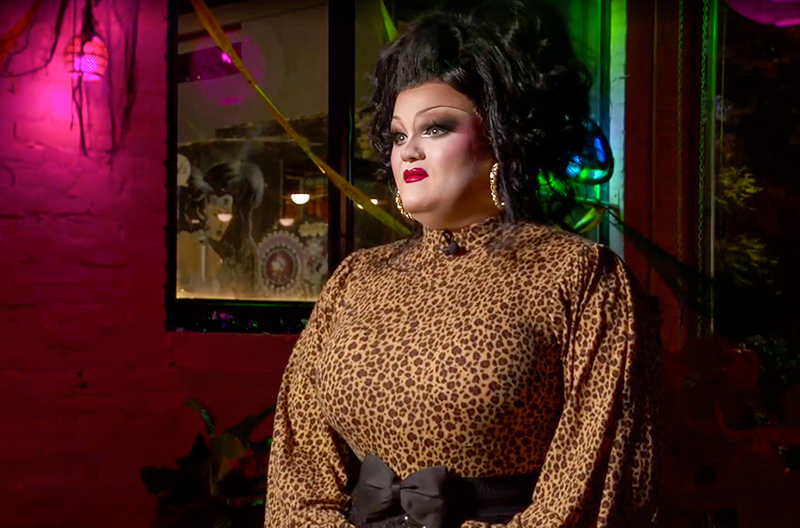
A new AI-generated attack ad supporting Jennifer Balkcom, the Republican nominee for North Carolina's 11th Congressional District, accuses Democratic nominee Jamie Ager of hosting a barn dance with drag queens and children.
The ad, paid for by the National Republican Congressional Committee and approved by Balkcom, was posted to the North Carolina Republican Party's official X account on October 22.
The ad shows Ager speaking into a microphone, with a Progress Pride flag hanging on a barn wall behind him. "Wanna know what we need more of in Washington, D.C.? Barn dances!" he says, as ABBA's "Dancing Queen" starts playing.
For months, political prognosticators and so-called "election nerds" have looked forward to November 3, 2026, the day of the midterm elections. Based on historical trends for the sixth year of a presidency, the party occupying the White House is expected to suffer electoral losses as the political pendulum swings back. Add to the mix inflation, high gas prices, a war in Iran, and the impact of Donald Trump’s tariffs, and the mood of the country is fairly sour.
Throughout the night, as polls in various states close, analysts will try to determine how strong the backlash to the incumbent president is -- prompting predictions of a "blue wave" or even a "blue tsunami." Below are several races to watch as each hour passes, and what certain outcomes could signal about the national political environment.
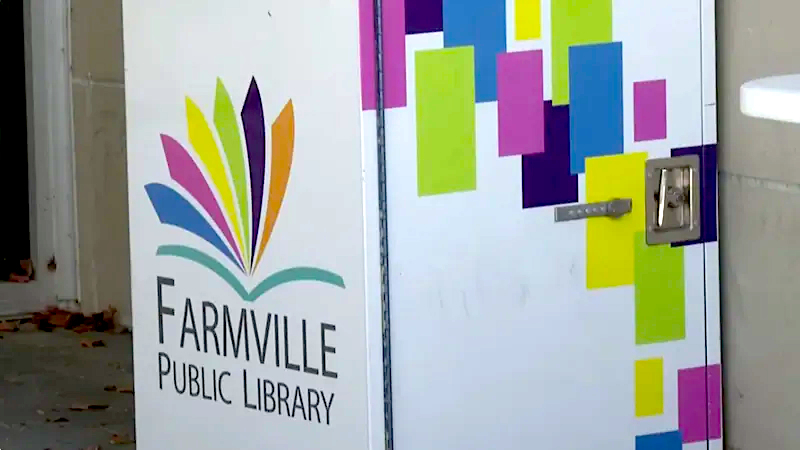
The Farmville Public Library logo does not resemble a traditional rainbow. It depicts an open book with multicolored pages and a spine in shades of teal, blue, magenta, lime green, orange, purple, and yellow, arranged in no particular order.
But three residents reportedly objected to the logo over concerns that its colors could be interpreted as a show of support for the LGBTQ community. After receiving their complaints, a town commissioner asked the town manager to remove the 14-year-old logo.
The logo was subsequently removed without public debate or discussion, surprising other local officials, including Farmville Mayor Alex Joyner.






You must be logged in to post a comment.